


Benefits of Open-Ended Toys for Child Development

In This Guide
If you’ve ever watched a child turn a simple toy into an entire world of imagination, you’ve already seen the magic of open-ended play.
As the owner of Learning Bugs and a parent of two young children myself, I’ve seen first-hand how certain toys keep children engaged for years, not weeks. Unlike toys that only work in one specific way, open-ended toys allow children to explore, imagine, and create in endless ways.
But what exactly are open-ended toys, and why are they so beneficial for child development?
What Are Open-Ended Toys?
Open-ended toys are toys that can be used in many different ways, rather than having a single fixed purpose.
There are no instructions telling children how to play. Instead, children decide what the toy becomes.
For example, a set of magnetic tiles might become:
-
a tower
-
a castle
-
a road for toy cars
-
a house for animals
-
or an entire imaginary city
Because the possibilities are endless, the toy evolves as the child grows.
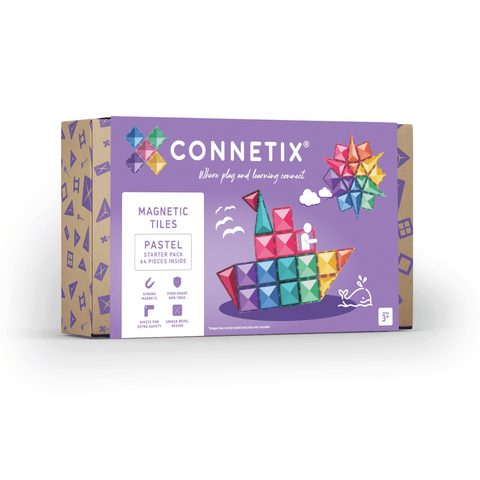
Some of the most popular open-ended toys parents buy from us include magnetic building sets like Connetix and dolls designed for imaginative role play.
1. They Encourage Creativity and Imagination
One of the biggest benefits of open-ended toys is that they encourage children to use their imagination.
Instead of pressing a button to make something happen, children become the creators of the play themselves.
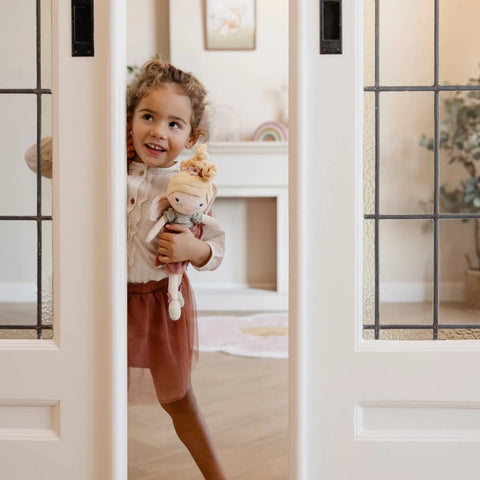
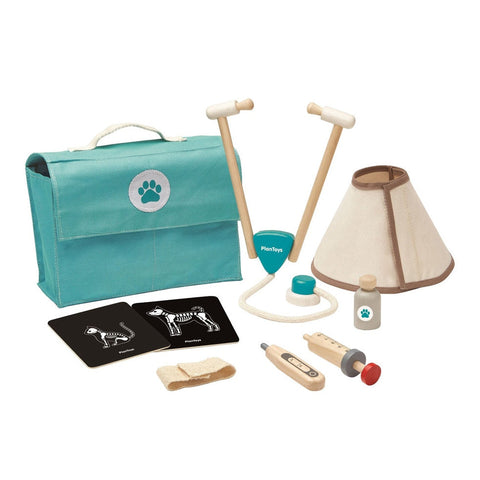
For example, dolls can become characters in all kinds of stories. At home, I’ve watched my children role play as doctors caring for their dolls, creating their own little worlds and conversations. My 18-month-old already enjoys pretending to put her baby doll to bed and feeding it.
This kind of imaginative play is incredibly valuable because it helps children practise storytelling, social interaction, and emotional understanding.
2. They Grow With Your Child
One of the reasons parents love open-ended toys is that children don’t grow out of them quickly.
Take magnetic tiles as an example.
A younger child might start by simply connecting pieces together or building small towers. As their skills grow, the same toy can be used to build castles, bridges, garages, or entire towns.
The toy stays the same, but the complexity of the play increases as the child develops.
This is why many parents prefer toys that can last for years rather than toys that lose their appeal after a few weeks.
3. They Support Problem Solving and STEM Skills
Many open-ended toys naturally introduce early STEM skills.
Building toys in particular encourage children to experiment, test ideas, and solve problems. When children build structures, they learn concepts like balance, shape, and spatial awareness without even realising they’re learning.
For example, children building with magnetic tiles often experiment with:
-
symmetry
-
structure
-
stability
-
patterns
-
design
This kind of play helps develop the foundations for maths, engineering, and problem solving later in life.
4. They Encourage Longer, Deeper Play
One thing many parents notice is that open-ended toys often lead to longer periods of independent play.
Because there are no strict rules or goals, children can stay engaged much longer as they explore their ideas.
Instead of completing a toy’s “main function” and losing interest, children keep inventing new ways to play.
This deeper type of play is incredibly beneficial for developing focus, persistence, and independence.
5. They Help Develop Social and Emotional Skills
Open-ended toys also support social development.
Role play toys such as dolls allow children to practise real-life situations. They might act out caring for a baby, preparing food, or helping someone who is unwell.
Through these scenarios, children explore empathy, communication, and understanding other people’s feelings.
This is one of the reasons dolls remain a favourite toy for so many children across different ages.
Do Structured Toys Still Have a Place?
Many parents wonder if they should avoid toys that light up or have specific functions.
In my opinion, those toys can absolutely have a place, but they work best in moderation.
Toys with sounds, buttons, or fixed functions can be fun and engaging. However, if a toy collection is made up mostly of toys that do everything for the child, it can sometimes limit creativity.
Balancing structured toys with open-ended toys tends to give children the best of both worlds.
Choosing Open-Ended Toys for Your Child
If you’re looking to introduce more open-ended play at home, start with toys that encourage creativity and imagination.
Some great examples include:
-
Dolls and role-play toys
These toys invite children to create their own stories and ideas rather than simply following instructions.
Final Thoughts
Open-ended toys support creativity, independence, and problem solving in a way that many traditional toys simply can’t.
They allow children to explore ideas freely, practise real-life scenarios, and develop important skills through play.
Most importantly, they’re the kinds of toys children return to again and again, growing with them as their imagination expands.