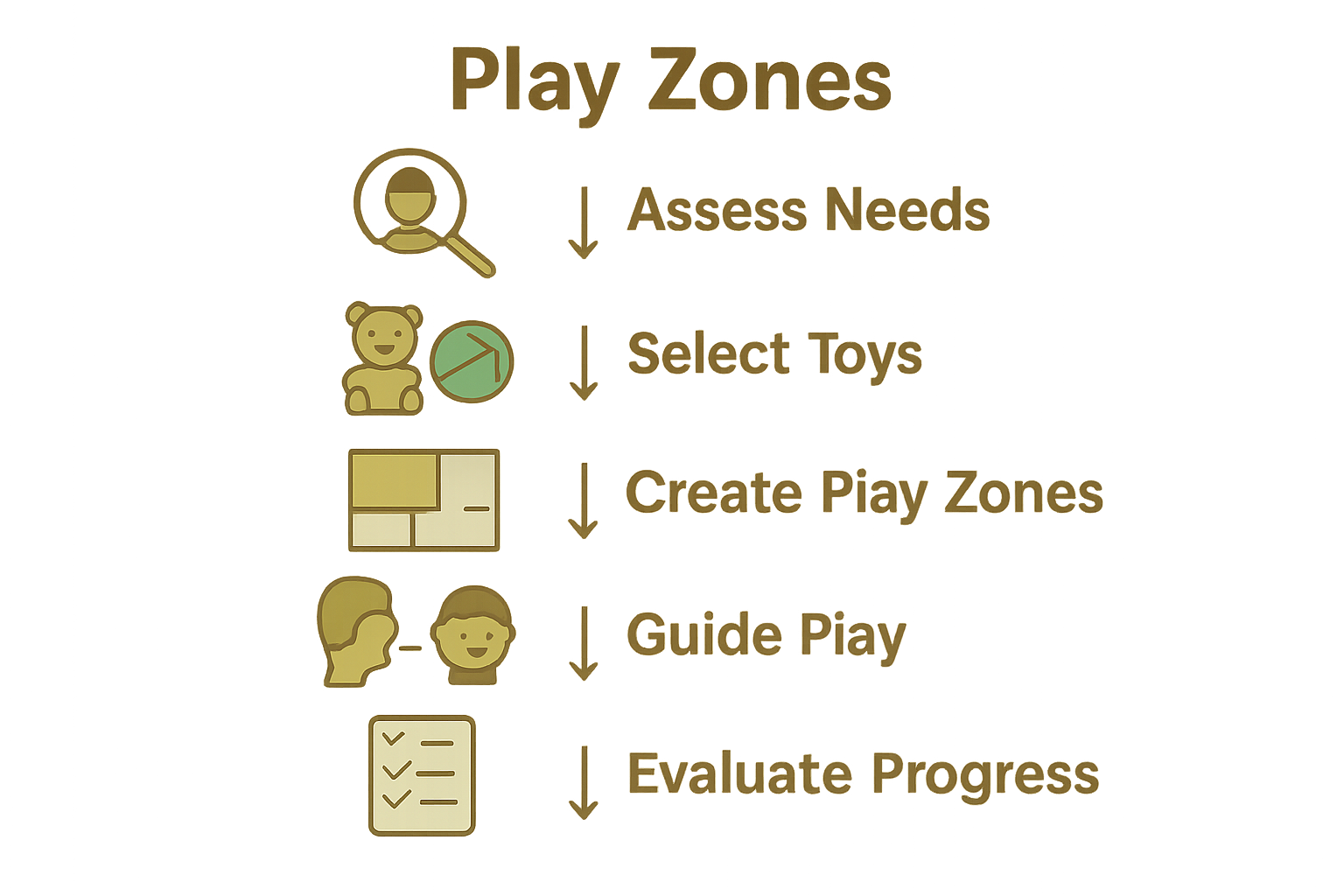

More than 60 percent of british parents say tailoring toys to their child’s needs makes a real difference in learning. Every child’s development is unique which can make choosing the right toys seem like a puzzle. By understanding what sparks your child’s interest and mixing the most compatible toys you can unlock play opportunities that inspire growth in ways that truly matter.
Table of Contents
- First 1: Assess Your Child’s Developmental Needs
- Second 2: Select Compatible Toys For Effective Pairing
- Third 3: Create Inviting Play Zones For Mixed Toys
- Fourth 4: Guide Interactive Play To Enhance Learning
- Fifth 5: Evaluate Your Child’s Engagement And Progress
Quick Summary
| Key Insight | Explanation |
|---|---|
| 1. Assess developmental needs first | Understand your child’s unique needs by observing play patterns, strengths, and interests to select suitable toys. |
| 2. Choose compatible toy combinations | Pair toys that complement each other and support different learning objectives for more engaging play. |
| 3. Create adaptable play zones | Design play areas that encourage exploration and cater to various play styles, ensuring accessibility and comfort. |
| 4. Guide play through gentle prompts | Facilitate interactive play by subtly encouraging exploration and problem-solving without dominating the experience. |
| 5. Regularly evaluate engagement | Track your child’s engagement and progress during play to refine toy selections and enhance their learning journey. |
First 1: Assess your child’s developmental needs
Understanding your child’s unique developmental needs is the foundational step in creating meaningful learning experiences through toy combinations. This assessment helps you select toys that not only entertain but actively support your child’s cognitive, social, motor, and emotional growth.
According to the Essex Local Offer, gathering comprehensive information is crucial. Start by carefully observing your child’s current play patterns, interests, and skill levels. Notice how they interact with existing toys: Do they prefer building, sorting, imaginative play, or physical movement? Look for specific indicators like hand eye coordination, problem solving approaches, communication attempts, and social interaction styles.
The Lambeth Council recommends a graduated approach to assessment. This means regularly evaluating your observations and being open to adjusting your toy selections. Pay attention to how your child responds to different play experiences track their engagement levels and emotional reactions. Are they frustrated or delighted? Challenged or overwhelmed? These insights will guide you in selecting toy combinations that genuinely support their developmental journey.
Key assessment areas include:
- Fine motor skills
- Cognitive problem solving
- Social interaction abilities
- Emotional regulation
- Language development
- Spatial awareness
Remember that every child develops uniquely. What works brilliantly for one might not suit another. The goal is creating personalised learning experiences that feel like play not structured training.
Second 2: Select compatible toys for effective pairing
Selecting compatible toys requires strategic thinking that goes beyond simply choosing visually appealing playthings. Your goal is to create meaningful learning combinations that challenge and engage your child while supporting their developmental progression.
According to NI Direct, selecting appropriate resources tailored to a child’s specific requirements is crucial. When pairing toys, consider complementary play styles and learning objectives. For instance, combine construction blocks with figurines to encourage both spatial reasoning and imaginative storytelling. Look for toys that build upon each other progressive complexity and allow multiple interaction methods.
The Phoenix Arch School emphasises continuous assessment in learning materials selection. This means regularly evaluating how your toy pairings impact your child’s engagement and skill development. Some powerful toy combinations might include:
- Wooden puzzles paired with sorting containers
- Building blocks matched with character figurines
- Musical instruments combined with rhythm matching games
- Art supplies integrated with storytelling props
Remember that successful toy pairings should feel organic and enjoyable. The most effective combinations will spark curiosity naturally without feeling like forced educational exercises. Watch your child’s reactions closely and be prepared to adapt your approach based on their evolving interests and abilities.
Third 3: Create inviting play zones for mixed toys
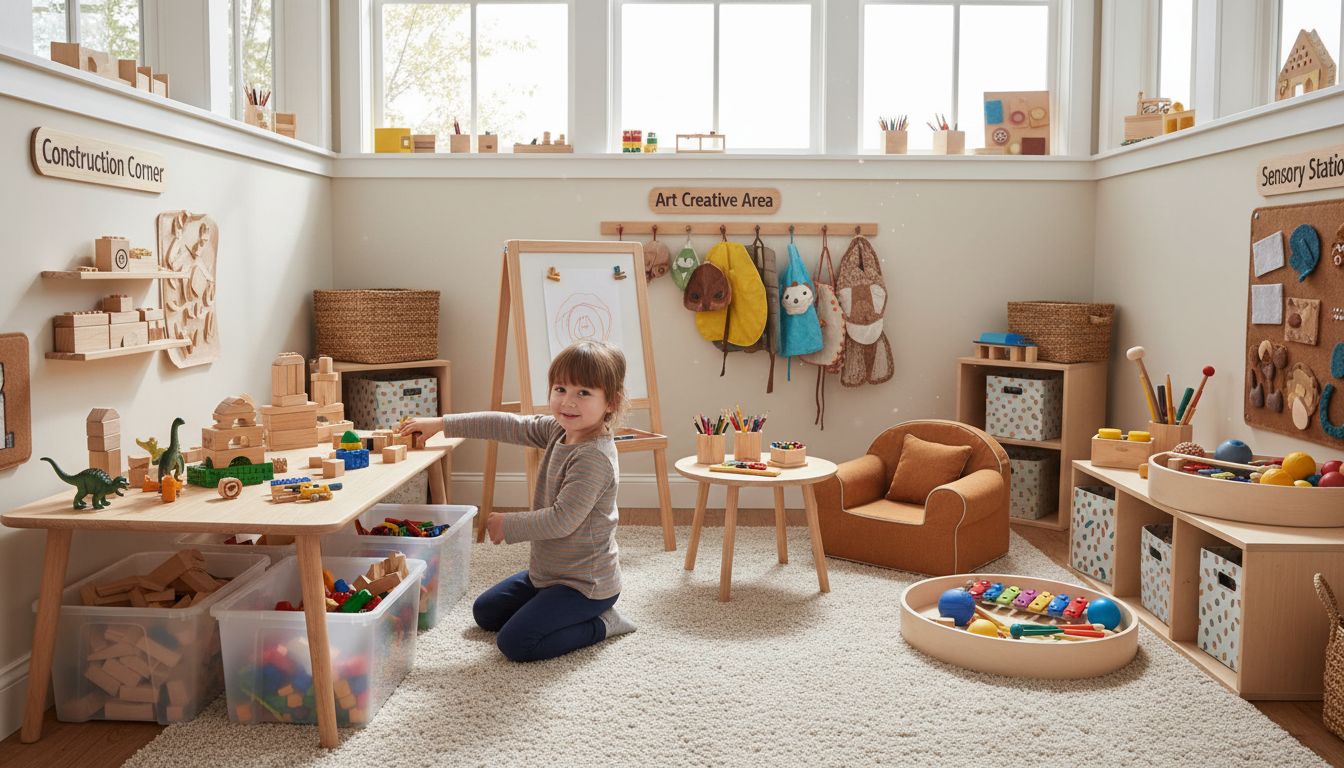
Creating an engaging play zone transforms ordinary spaces into dynamic learning environments that spark curiosity and encourage creative interaction. Your goal is to design a flexible area that invites exploration and supports multiple play styles simultaneously.
According to the Department for Education, play environments should be designed to cater to children’s diverse developmental needs. Start by selecting a dedicated space with good natural light and enough room for movement. Consider using low shelves or clear storage containers that allow your child to see and access toys independently. This visual accessibility encourages self directed play and helps children understand where items belong.
The KIDS Charity emphasises tailoring environments to individual requirements. Divide your play zone into different activity areas that naturally encourage toy combinations:
- Construction corner with building blocks and imaginative play figures
- Art exploration station with drawing materials and storytelling props
- Sensory exploration area with musical instruments and textured objects
- Quiet reading nook with soft cushions and interactive storybooks
Remember to rotate toys periodically to maintain interest and prevent overstimulation. The most effective play zones feel welcoming and adaptable allowing your child to lead their own learning journey.
Fourth 4: Guide interactive play to enhance learning
Guiding interactive play is an art of subtle encouragement that transforms ordinary playtime into meaningful learning experiences. Your role is to gently facilitate exploration while allowing your child to lead their own discovery journey.
According to Lambeth Council, effective interactive play involves implementing structured interventions that support learning objectives. Begin by observing your child’s natural play patterns and introducing gentle prompts that extend their current capabilities. Ask open ended questions that encourage problem solving such as “What might happen if…” or “How could we make this work differently?”
The Phoenix Arch School emphasises continuous assessment during play interactions. This means staying responsive and adaptive to your child’s evolving skills and interests. Some strategies for guiding interactive play include:
- Demonstrate new play techniques without taking over
- Ask curious questions that spark imagination
- Provide minimal guidance that encourages independent thinking
- Celebrate creative problem solving approaches
- Allow momentary struggles that build resilience
Remember that the most powerful learning happens when children feel empowered to explore independently. Your role is a supportive guide not a commanding director transforming play into a joyful collaborative learning experience.
Fifth 5: Evaluate your child’s engagement and progress
Evaluating your child’s learning journey transforms passive observation into an intentional developmental strategy. Your goal is to understand how toy combinations impact their growth and adapt your approach accordingly.
According to Devon Information Advice and Support, tracking progress requires a systematic ‘assess, plan, do, review’ approach. Begin by creating simple observation notes during playtime documenting specific interactions such as problem solving attempts, creativity levels, and emotional responses. Look for subtle indicators of developmental progress like increased concentration, more complex play scenarios, or improved communication during toy interactions.
The NI Direct emphasises continuous evaluation to ensure support remains effective. Your assessment toolkit might include:
- Periodic play session recordings
- Dated skill milestone checklists
- Photographs documenting play complexity
- Brief written reflections on observed behaviours
- Tracking specific developmental markers
Remember that progress is not always linear. Some days your child will demonstrate remarkable skills while other days might seem less impressive. Patience and consistent gentle observation are key to understanding their unique developmental pathway.
Discover Thoughtful Toy Combinations That Spark Growth and Joy
The challenge of combining toys effectively to support your child’s unique developmental journey can feel overwhelming. From assessing fine motor skills to encouraging imaginative storytelling, it requires careful choices that nurture growth without overwhelming. Learning Bugs understands this delicate balance by offering a curated selection of timeless, creative toys designed to inspire curiosity and active play. Our collection includes wooden toys, role play sets, and educational kits that perfectly complement each other to create engaging play zones as described in the step-by-step guide.
Explore our range today at Learning Bugs where every product is chosen to support personalised learning experiences through meaningful play. Whether you want to build interactive play corners or guide your child’s exploratory learning, our toys help you set the stage for success. Start combining quality toys that grow with your child’s skills and spark joyful discoveries now.
Frequently Asked Questions
How can I assess my child’s developmental needs for toy selection?
Begin by observing your child’s play patterns, interests, and skill levels. Take note of their preferred activities and how they interact with existing toys; this will help you identify the types of toys that best support their growth.
What types of toy combinations can enhance my child’s learning experience?
Select toys that complement each other and encourage multi-faceted play. For example, pairing building blocks with character figurines can develop both spatial reasoning and imaginative storytelling.
How do I create an inviting play zone for mixed toys?
Designate a specific area with good natural light and enough space for movement, divided into zones for different activities. Use low shelves or clear containers so your child can easily access the toys, promoting independent play and exploration.
What strategies can I use to guide my child’s interactive play?
Introduce open-ended questions during play to encourage problem solving and creativity. For instance, ask questions like “What happens if we change this?” to help them think critically while leading their own discovery.
How can I evaluate my child’s engagement with toy combinations?
Regularly document your child’s interactions during play, noting their progress in skills and emotional responses. Set a routine to review these observations and adjust the toy combinations to maximise engagement and support their development.