

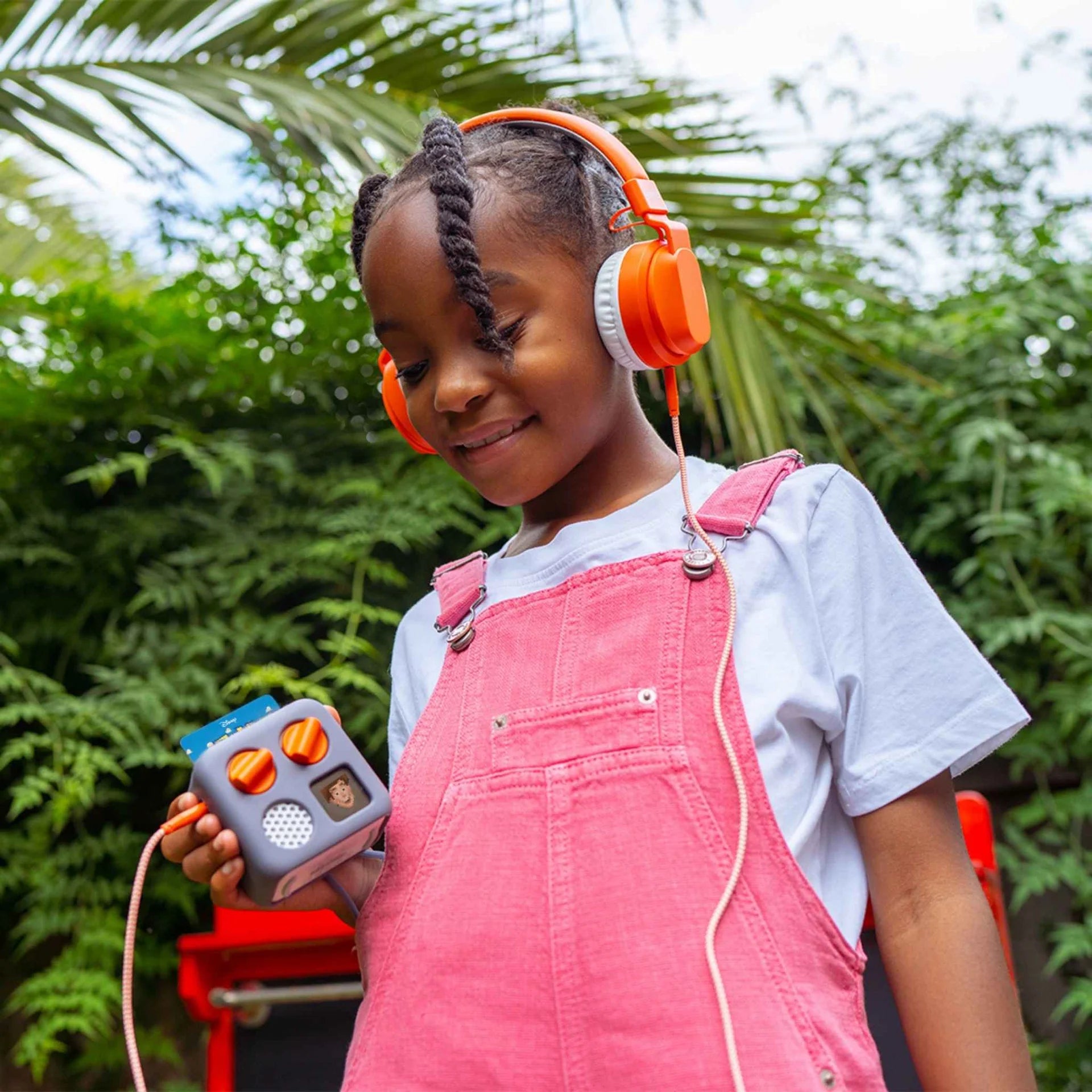


We sell Yoto at Learning Bugs and get asked about age almost every single day. Is my two year old too young? Is my seven year old too old? Is it worth buying one for a child who will only use it for a year before losing interest? These are the right questions to ask, and the honest answers depend entirely on the age and stage of the child you are buying for.
Here is our genuine, no-fluff breakdown by age with specific card recommendations from our range at every stage.
Is There a Minimum Age for Yoto?
Yoto recommends their players from age 3 and up, and that is broadly the right guidance. The cards are small enough to be a choking hazard for children under 3 who still put things in their mouths, and the concept of slotting a card in and pressing a button to hear a story requires a level of dexterity and understanding that most children under 2 simply do not have yet.
That said, many families use Yoto with children from around 18 months under close adult supervision, particularly for nursery rhyme and song cards where the child does not need to navigate between tracks. If you are buying for a child under 3, the Yoto Mini is the better choice — it is smaller, lighter, and easier for small hands to hold.
Ages 2 to 3 — Early Days
At this age Yoto works best as a shared experience rather than something children use completely independently. The concept clicks quickly — slot the card in, something happens — and children this age love that cause and effect. But the real independence that makes Yoto so popular with families tends to come a little later.
The cards that work best at this age are short, musical, and familiar. Children want to hear things they already know.
Our pick: Row Your Boat and Other Pre-School Songs — over 20 nursery rhymes and songs that children this age already know from nursery. One of the most replayed cards we sell across all age groups. If you are buying a first Yoto card for a child under 3, start here.
Ages 3 to 5 — The Sweet Spot
This is the age group that gets the most out of Yoto, and the age at which the independence factor really kicks in. Children aged 3 to 5 can slot their own card in, adjust the volume themselves, and listen independently at bedtime without needing a grown up to set anything up. For many families this is the moment screen time genuinely reduces — not because it is taken away, but because children choose audio over screens when they have something they love.
The card library is strongest at this age range. Almost everything in the Yoto catalogue is written for this group.
Our picks:
The Gruffalo's Child — story, read-along version and song on a single card. Children who love the Gruffalo come back to this one again and again. One of the most consistently loved cards in our range.
A Squash and a Squeeze — short, funny, and perfectly paced for younger children who cannot yet sit through a longer story. Julia Donaldson's very first book and one that lands every time.
Percy the Park Keeper Collection — seven gentle Nick Butterworth stories read by Jim Broadbent. The card that parents tell us most often becomes part of the bedtime routine. Warm, unhurried, and exactly right for this age.
Funny Paddington Stories — seven Paddington Bear stories read by Stephen Fry and Jim Broadbent. Nearly an hour of content that children aged 3 to 5 tend to be completely devoted to.
PAW Patrol Mighty Pup Power — for children who love PAW Patrol. Five Mighty Pups adventures that meet children exactly where their interests already are.
Sounds for Sleep — not a story card but one of the most practically useful cards we stock. Children being able to put their own sleep sounds on gives them a sense of control at bedtime that many families find makes a genuine difference.
Ages 5 to 7 — Building the Collection
Children this age have strong opinions about what they like and will tell you very clearly which card they want. They are starting to engage with longer stories and more complex plots, and the Yoto library has a lot to offer at this stage. This is also the age at which Yoto starts to compete directly with screens — and when the card library is right, it wins.
Our picks:
The Tiger Who Came to Tea and Other Stories — five Judith Kerr stories that children and parents enjoy equally. One of the cards with the best staying power we stock — parents tell us their children are still asking for it months later.
The Gruffalo and Friends Collection — six Julia Donaldson audiobooks on one card including The Gruffalo, Room on the Broom, The Snail and the Whale and more. Over two hours of content that children aged 5 and up tend to listen to properly rather than just having on in the background.
Funnybones: The Collection — eight Allan Ahlberg stories read by Stephen Mangan. Short, punchy and genuinely funny. A brilliant card for children who find longer audio difficult to sit with.
Spidey and His Amazing Friends — four Marvel stories at exactly the right level for ages 3 to 6. For children who are not naturally drawn to quieter story cards, this meets them where they are.
BrainBots: The Human Body — eight educational cards covering the human body in a way that feels like discovery rather than learning. Children aged 6 and up who are naturally curious tend to come back to specific sections again and again.
Ages 7 to 10 — Is Yoto Still Worth It?
Yes — but the card choice matters more at this age. Children aged 7 to 10 are ready for proper chapter books and longer stories, and the Yoto library has several cards that genuinely hold their attention. The players that work best for this age group are the ones with enough content to feel immersive rather than simplified.
This is also the age at which some children start to lose interest if the card library does not move with them. The key is choosing cards that feel appropriately challenging rather than cards designed for younger children.
Our picks:
The Famous Five Collection — eight complete Enid Blyton audiobooks, over 36 hours of listening, read by Jan Francis. This is the card that parents tell us most consistently replaces screen time — children get so absorbed in the stories that they choose to keep listening. Classic storytelling that has worked for this age group for generations.
5 Minute Spider-Man Stories — twelve short Marvel adventures for children who want big stories in quick bursts. The five minute format works perfectly for children this age who have other demands on their time.
5 Minute Marvel Stories — twelve Avengers stories featuring Spider-Man, Iron Man, Black Panther, Captain Marvel and more. The natural companion to the Spider-Man card for children who love the wider Marvel universe.
Ladybird Audio Adventures Volume 1 — five educational topics including Outer Space, The Animal Kingdom, and Dinosaurs. Over five hours of content that children aged 6 to 10 who are naturally curious return to again and again.
The Magic Faraway Tree Trilogy — three Enid Blyton novels read by Kate Winslet. Nearly 14 hours of classic storytelling that works beautifully for children aged 7 and up at bedtime.
Is 7 Too Old for a Yoto Player?
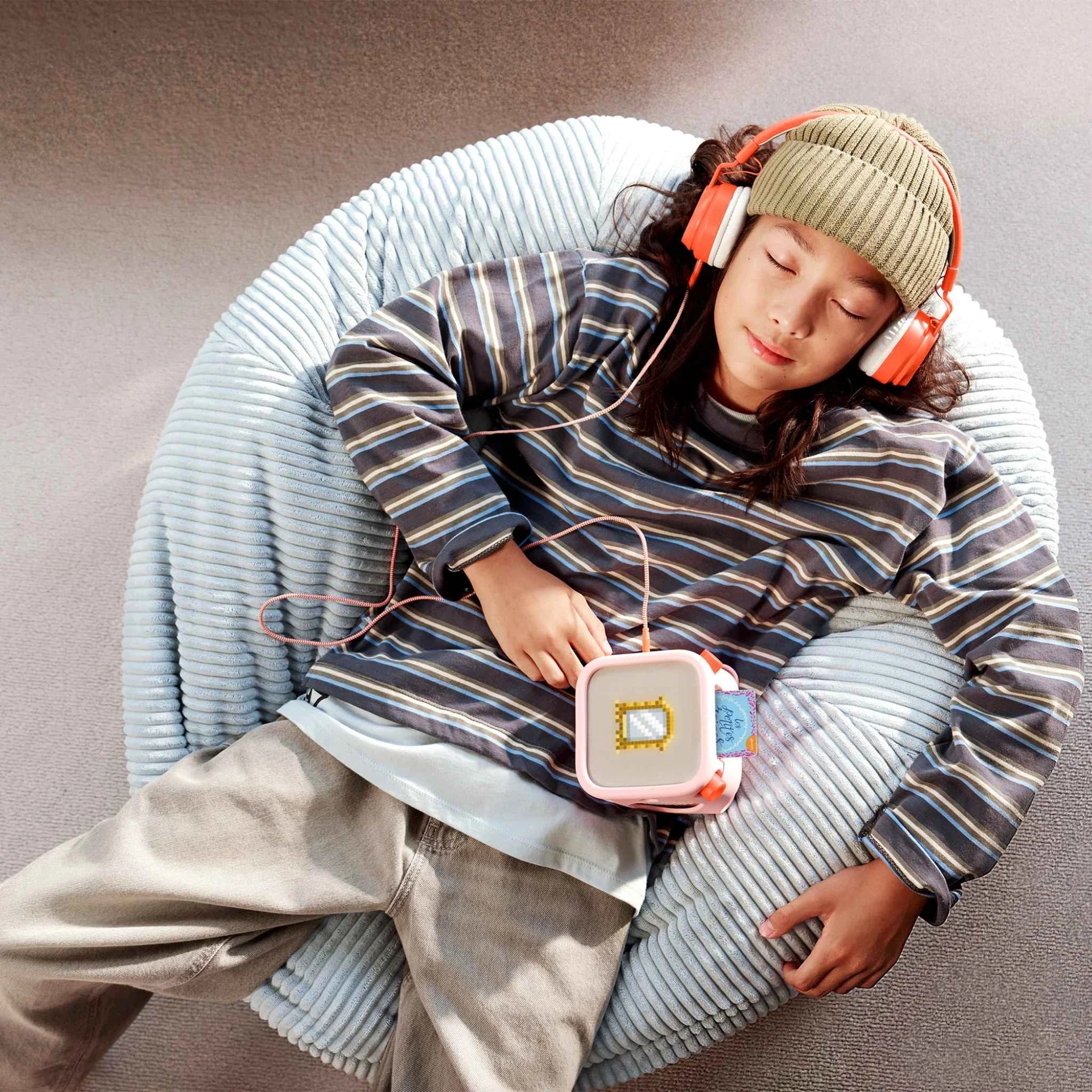
No — and this is one of the questions we get asked most often. Seven is actually one of the best ages for Yoto because children this age are ready for the longer, more immersive content that makes the player genuinely worth owning. The Famous Five Collection alone gives a seven year old over 36 hours of listening. Children who discover audiobooks at this age often become devoted listeners for years.
The honest answer is that Yoto becomes less relevant somewhere between 10 and 12 for most children, as they move towards music streaming and their own devices. But between 7 and 10 it is one of the best screen-free investments a family can make.
Is a Yoto Player Worth It for a 5 Year Old?
Yes — age 5 is right in the middle of the sweet spot. A five year old can use a Yoto completely independently, has strong enough opinions to build a card collection they actually love, and is at an age where the independence factor matters most. Many families buy their first Yoto at age 3 or 4 and find it becomes part of the daily routine for years afterwards. Age 5 is not too late — it is exactly the right time.
Which Yoto Player Should You Buy?
For most ages, the Yoto Player (3rd Generation) is the better choice — larger speaker, nightlight, ok-to-wake alarm, and room thermometer. For younger children or families who travel regularly, the Yoto Mini is more portable and easier for small hands. Both players use exactly the same cards. Read our full Yoto Player UK review for a complete side-by-side comparison.
Where to Buy Yoto in the UK
We stock the full Yoto range at Learning Bugs — players, accessories, and a carefully chosen selection of Yoto cards across all ages and interests, with free UK delivery on orders over £60.
👉 Shop Yoto Players & Accessories 👉 Browse all Yoto Cards
Not sure which card is right for a specific age or interest? Email us at hey@learningbugs.co.uk — we are a family run shop and we know our stock well.