

Over 60 percent of parents choose wooden toys for their durability and natural appeal, but keeping them clean and safe presents unique challenges. These cherished toys often end up in little hands and mouths, so regular maintenance becomes more than a matter of aesthetics. With the right care, you can protect your child from hidden risks, preserve each toy’s beauty, and ensure years of safe, creative play.
Table of Contents
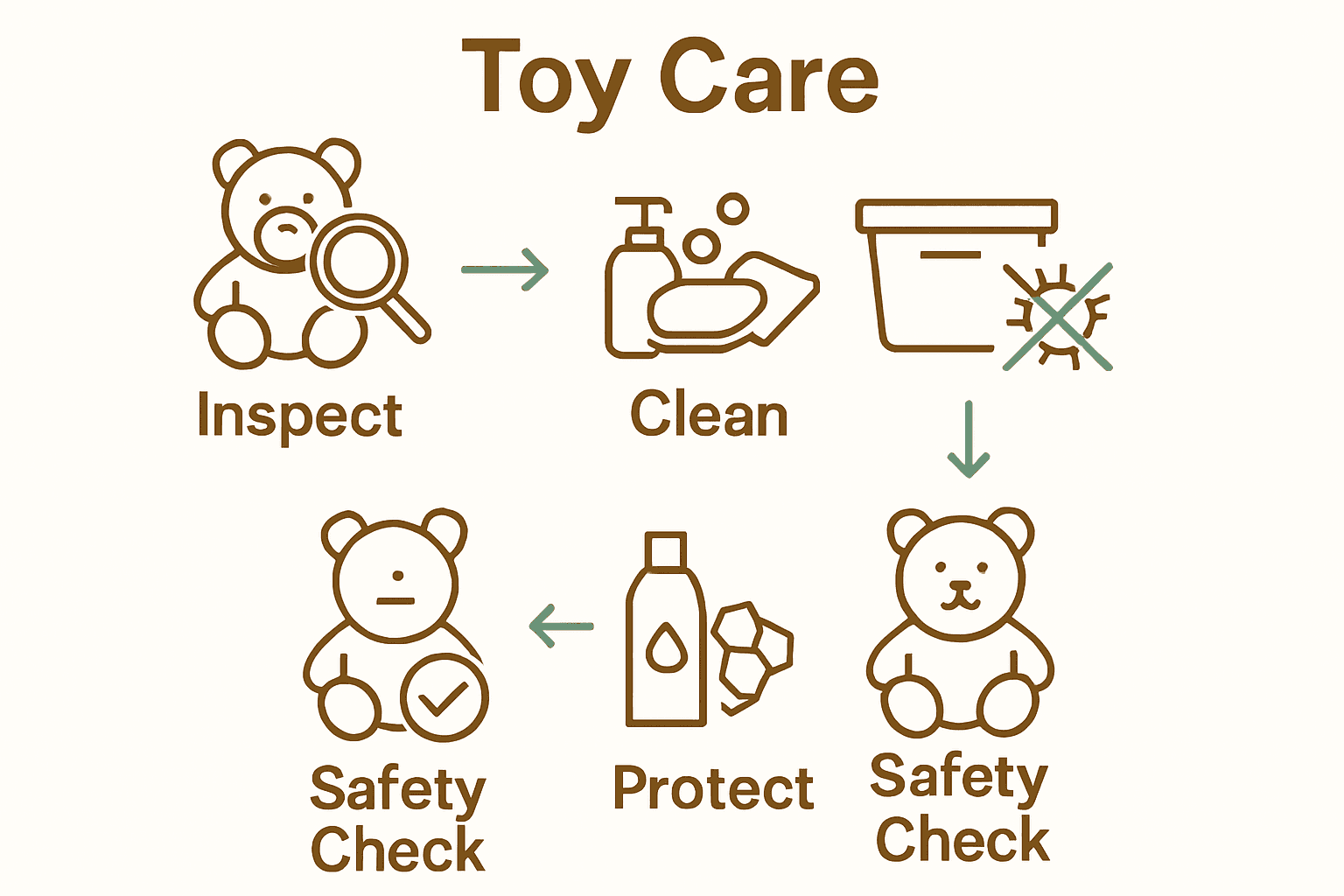
- Step 1: Prepare Wooden Toys For Cleaning And Maintenance
- Step 2: Clean Wooden Toys Safely Using Suitable Methods
- Step 3: Nourish Wood To Maintain Natural Shine And Durability
- Step 4: Protect Toys From Damage And Environmental Exposure
- Step 5: Inspect And Verify Safety After Each Care Routine
Quick Summary
| Main Insight | Clarification |
|---|---|
| 1. Inspect toys before cleaning | Conduct a thorough visual check for cracks or damage to ensure safety and effective cleaning. |
| 2. Use mild cleaning solutions | Warm soapy water or diluted vinegar effectively sanitize wooden toys without damaging them. |
| 3. Nourish wood regularly | Apply food-grade mineral oil or beeswax monthly to maintain the wood’s beauty and prevent drying. |
| 4. Store toys properly | Keep wooden toys in a stable environment away from direct sunlight and extreme temperatures to avoid damage. |
| 5. Conduct weekly safety checks | Regularly inspect toys for splinters or damage to ensure they remain safe for children to use. |
Step 1: Prepare wooden toys for cleaning and maintenance
Before diving into the cleaning process, you need to carefully inspect and prepare your wooden toys for thorough maintenance. According to Woodland Avenue Practice, checking the condition of your wooden toys is crucial for ensuring safe and effective cleaning.
Begin by conducting a comprehensive visual inspection of each wooden toy. Look closely for any signs of damage such as chips, cracks, splinters, or rough surfaces that could potentially harm your child or compromise the toy’s integrity. As recommended by Hertfordshire Partnership University NHS Foundation Trust, remove any toys with significant wear and tear that cannot be safely repaired.
Set up a dedicated cleaning area away from food preparation spaces to prevent cross contamination. Gather all your cleaning supplies in advance: soft cloths, mild soap, white vinegar, clean water, and soft brushes. By preparing your workspace and toys thoughtfully, you will create a safe and effective environment for maintaining your child’s beloved wooden playthings. Proper preparation ensures that each toy receives careful attention and remains in excellent condition for years of imaginative play.
Step 2: Clean wooden toys safely using suitable methods
Cleaning wooden toys requires a gentle yet thorough approach to maintain their quality and ensure your child’s safety. According to Michigan State University Extension, warm soapy water is an effective first step in sanitising these treasured playthings.
Start by preparing a cleaning solution of mild soap and warm water. Dip a soft cloth into the solution and carefully wipe down each wooden toy, ensuring you clean all surfaces and crevices without saturating the wood. As recommended by GECCO, you can also create a natural disinfecting solution using distilled white vinegar mixed with water, which helps kill bacteria and mold without harsh chemicals.
After cleaning, it is crucial to dry the toys completely. Lay them out on a clean towel in a well ventilated area, turning them periodically to ensure all surfaces dry evenly. Avoid using direct heat sources like radiators or hairdryers, as these can cause wood to crack or warp. By taking these careful steps, you will preserve the longevity of your wooden toys while keeping them hygienic for your child’s continued play and learning.
Step 3: Nourish wood to maintain natural shine and durability
Wood is a living material that requires gentle care to preserve its beauty and longevity. According to CFRC Limited, maintaining wooden surfaces involves creating a balanced approach that protects the material without causing damage.
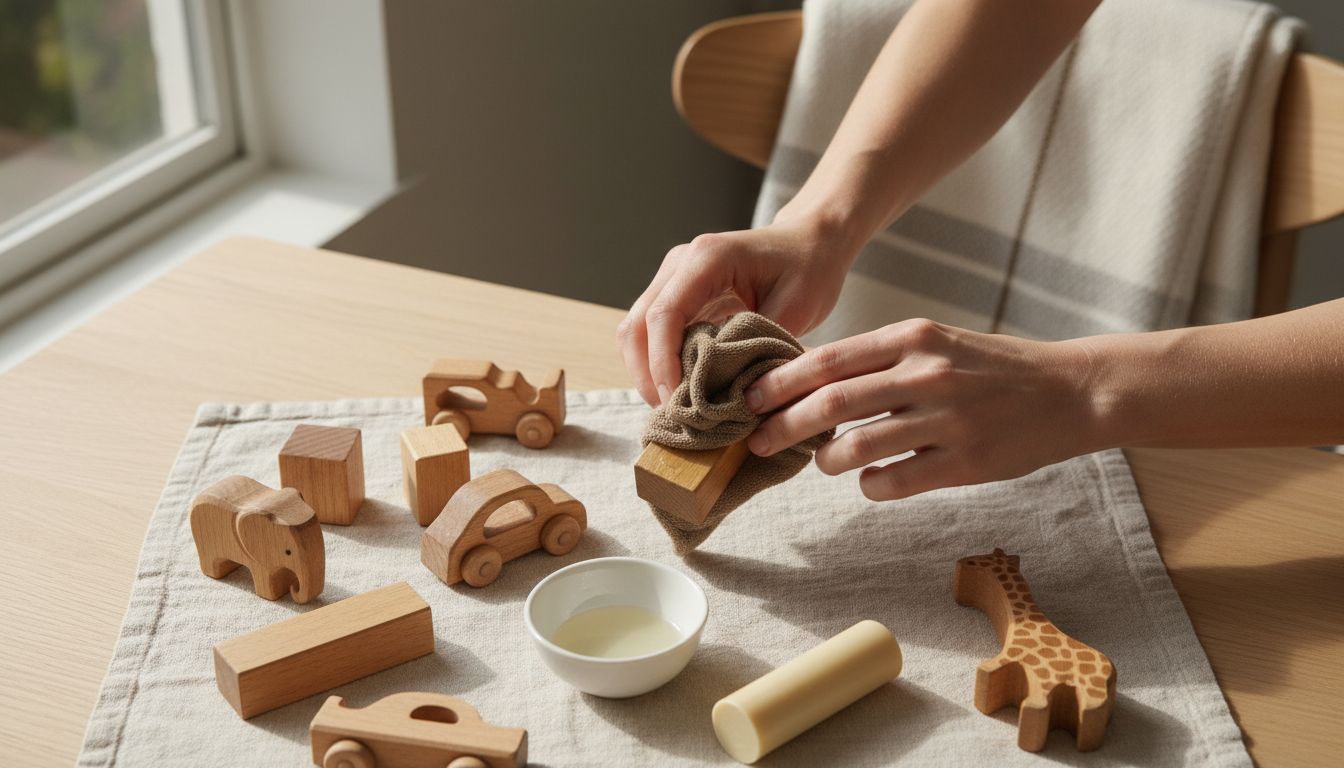
To nourish your wooden toys, prepare a natural conditioning solution using food grade mineral oil or pure beeswax. Apply a thin layer using a soft cloth, working in the direction of the wood grain to prevent scratching. As recommended by University of Maine Cooperative Extension, avoid oversaturating the wood and ensure you wipe away any excess oil to prevent buildup.
Once a month, spend a few minutes massaging a small amount of conditioning oil into your wooden toys. This practice will help prevent drying, cracking, and maintain the wood’s natural lustre. The key is gentle, consistent care that respects the natural properties of the wood. By taking these simple steps, you will help your children’s wooden toys remain beautiful, smooth, and ready for countless hours of imaginative play.
Step 4: Protect toys from damage and environmental exposure
Preserving the quality of wooden toys requires strategic placement and careful environmental management. According to the National Museum of African American History and Culture, maintaining a consistent temperature and protecting wooden items from direct sunlight are crucial steps in preventing long term damage.
Create a dedicated storage area for your wooden toys that avoids extreme temperature fluctuations and direct sunlight. Use soft fabric storage bags or closed shelving units to protect the toys from dust and potential scratches. As recommended by CFRC, consider using protective mats or coasters underneath toys to prevent surface damage when they are placed on hard surfaces.
Pay special attention to humidity levels in your storage area. Wooden toys are sensitive to moisture and can warp or develop mould if kept in damp environments. During periods of high humidity, use silica gel packets in storage containers to absorb excess moisture. By implementing these protective strategies, you will help ensure your wooden toys remain in pristine condition and can be cherished by your children for years to come.
Step 5: Inspect and verify safety after each care routine
Ensuring the ongoing safety of wooden toys requires a systematic and thorough inspection process. According to Woodland Avenue Practice, a weekly assessment is crucial to identify potential hazards that could compromise your child’s playtime safety.
Carefully examine each wooden toy after cleaning and conditioning. Run your hands gently over the surface, checking for any developing splinters, cracks, or rough edges that might have emerged during the maintenance process. As recommended by Hertfordshire Partnership University NHS Foundation Trust, pay close attention to joints, moving parts, and areas that experience the most wear and tear.
If you discover any signs of damage such as loose components, sharp edges, or structural weakening, remove the toy from circulation immediately. Create a clear system where damaged toys are set aside for potential repair or permanent retirement. Your vigilance in these regular safety checks will help protect your children from potential injuries and extend the life of their beloved wooden toys. Remember that a few minutes of careful inspection can prevent accidents and ensure countless hours of safe, imaginative play.
Keep Your Wooden Toys Safe and Beautiful with Learning Bugs
Caring for wooden toys requires attention to detail—from gentle cleaning and nourishing wood to protecting against environmental damage. These essential steps help preserve the natural charm and safety of timeless playthings that inspire creativity and active learning in your child. At Learning Bugs, we understand the importance of providing families with high-quality, durable wooden toys that stand up to careful care routines and years of joyful use.
Discover a thoughtfully curated collection of wooden toys and educational playsets designed to promote sensory development and imaginative play. Visit Learning Bugs today to explore our range of timeless toys and find expert guidance on maintaining their beauty and safety. Take the first step in nurturing meaningful childhood experiences with toys that last. Start browsing now to secure well-crafted toys that grow with your child and make every play moment special.
Frequently Asked Questions
How do I prepare wooden toys for cleaning?
Start by inspecting each wooden toy for damage such as cracks or splinters. Set up a dedicated cleaning area and gather your supplies, including soft cloths, mild soap, and white vinegar, before beginning the cleaning process.
What is the best method to clean wooden toys safely?
Use a solution of mild soap and warm water to wipe down the toys gently without saturating them. Alternatively, mix white vinegar with water for a natural disinfectant; after cleaning, ensure the toys are dried completely in a well-ventilated area.
How can I nourish wooden toys to maintain their shine?
Apply a thin layer of food-grade mineral oil or pure beeswax to the toys using a soft cloth, following the wood grain. Repeat this conditioning process once a month for best results, ensuring to wipe away any excess oil to prevent buildup.
What steps should I take to protect wooden toys from damage?
Store wooden toys in a temperature-controlled environment away from direct sunlight, using soft fabric bags or closed shelving. Monitor humidity levels and consider using silica gel packets in storage to prevent moisture issues that can warp wood.
How often should I inspect wooden toys for safety?
Conduct safety checks on wooden toys weekly to ensure they remain safe for play. Look for any signs of damage such as splinters or cracks, and remove any toys that display these issues immediately to prevent accidents.
Recommended
- Wooden Toys Care Guide: Keep Playthings Safe and Lasting – Learning Bugs
- Wooden Toy Care Guide: Maintain Safe and Lasting Playthings – Learning Bugs
- Role of Wooden Toys Today: Complete Parent Guide – Learning Bugs
- Why Choose Wooden Toys: Complete Guide for Families – Learning Bugs
- Bio-Spielzeug sicher aufbewahren: So geht’s 2025 | PAT & PATTY
- Was macht Spielzeug sicher? Die wichtigsten Aspekte erklärt | PAT & PATTY
0 comments