

Did you know that more than 80 percent of parents say they worry about toy safety and quality for their children? The right wooden toys do more than entertain, they help young minds grow while providing peace of mind for adults. Finding toys that match your child’s needs, meet strict safety standards, and support a cleaner planet can make a real difference in every stage of early childhood.
Table of Contents
- Step 1: Identify Your Child’s Age And Developmental Needs
- Step 2: Review Safety Features And Construction Quality
- Step 3: Select Eco-Friendly And Sustainable Materials
- Step 4: Evaluate Play Value And Educational Benefits
- Step 5: Verify Trusted Sellers And Certifications
Quick Summary
| Key Point | Explanation |
|---|---|
| 1. Choose age-appropriate toys | Select toys that align with your child’s developmental stage for effective learning and play. |
| 2. Focus on safety features | Ensure toys are free from hazards, have smooth edges, and comply with safety standards for peace of mind. |
| 3. Prioritize eco-friendly materials | Look for toys made from sustainably sourced wood and non-toxic finishes to protect the environment. |
| 4. Assess educational value | Choose toys that encourage creativity, problem-solving, and skill development suitable for your child’s growth. |
| 5. Verify seller trustworthiness | Research sellers for safety certifications and customer reviews to ensure quality and reliability of toys. |
Step 1: Identify your child’s age and developmental needs
Picking the right wooden toys starts with understanding your child’s unique developmental stage. As recommended by Indigo Jamm, selecting toys that match your child’s current abilities and interests is crucial for meaningful play and learning.
Each age group requires different types of toys that support specific developmental milestones. For babies and young toddlers (0-2 years), focus on toys that encourage sensory exploration and basic motor skills. Look for wooden items with smooth edges, chunky grips, and bright colours that stimulate visual tracking and hand eye coordination. As children progress to preschool age (3-5 years), seek toys that promote more complex problem solving, imagination, and fine motor skill development.
Key considerations for age appropriate toy selection include:
- Complexity of the toy mechanism
- Safety features like rounded edges
- Size and weight suitable for small hands
- Potential for open ended play and creativity
When in doubt, always consult the manufacturer’s recommended age guidelines and observe your child’s individual capabilities.
7 Best Learning Toys for Toddlers to Boost Development can provide additional insights into selecting the perfect developmental toys.
Step 2: Review safety features and construction quality
When selecting wooden toys, safety and quality are paramount. According to the UK Office for Product Safety and Standards, parents must be vigilant about potential choking hazards and toy construction.
Start by closely examining the toy for critical safety elements. Look for smooth, splinter free surfaces and securely attached components that cannot be easily pulled apart. British Standards Institution recommends checking for compliance with BS EN 71 safety standards, which ensures toys meet rigorous mechanical and physical safety requirements.
Key safety inspection points include:
- Checking for sharp edges or potential breakage points
- Ensuring paint and finishes are non toxic
- Verifying no small parts can detach
- Confirming wood is sustainably sourced and treated
Remember that high quality wooden toys should feel sturdy, have seamless joints, and withstand gentle testing.
 When in doubt, choose toys from reputable manufacturers who prioritise child safety and developmental appropriateness.
Step 3: Select eco-friendly and sustainable materials
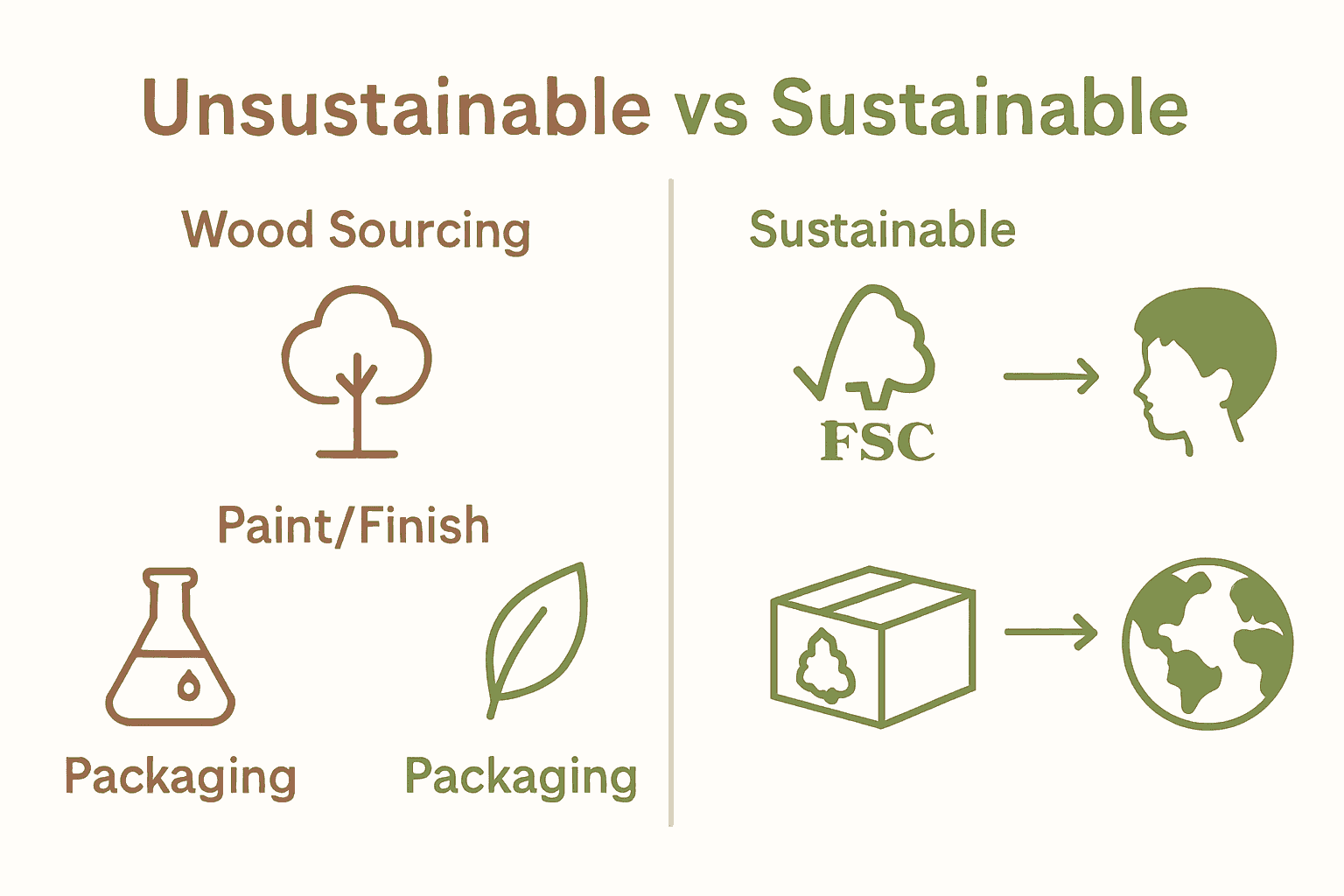
Choosing eco-friendly wooden toys is a responsible decision that benefits both your child and the environment. Indigo Jamm emphasizes the critical importance of selecting toys made from responsibly sourced materials that support sustainable manufacturing practices.
When evaluating eco-friendly wooden toys, look for certifications and clear information about wood sourcing. Prioritize toys crafted from renewable woods like beech, maple, or bamboo that are harvested through sustainable forestry practices. Check for natural, water based finishes and non toxic paints that eliminate harmful chemical treatments. Sustainable wooden toys should not only be environmentally conscious but also durable enough to be passed down through generations.
Key considerations for sustainable toy selection include:
- Sourcing from manufacturers with transparent environmental policies
- Choosing toys made from FSC certified wood
- Selecting products with minimal packaging
- Supporting brands committed to reducing environmental impact
Remember that sustainable toys are an investment in both your child’s play experience and the planets future. By making mindful choices, you support responsible manufacturing and teach your children valuable lessons about environmental stewardship.
Step 4: Evaluate play value and educational benefits
Indigo Jamm highlights the critical importance of selecting wooden toys that go beyond mere entertainment, focusing on their potential to support children’s developmental journey. Understanding the educational value of a toy requires more than a casual glance.
When assessing play value, look for toys that encourage open ended play and multiple modes of interaction. Seek out wooden toys that challenge your child’s problem solving skills, promote creativity, and support specific developmental milestones. Consider how the toy might grow with your child potentially offering different play experiences as their skills and imagination expand. Motor skill development, spatial reasoning, and imaginative thinking are key indicators of a toy’s educational potential.
Key considerations for evaluating play and educational benefits include:
- Complexity that matches your child’s current developmental stage
- Potential for multiple play scenarios
- Ability to stimulate imagination and creativity
- Opportunities for skill building like fine motor control
For parents seeking deeper insights, our guide to understanding educational toys can provide additional perspectives on selecting toys that genuinely support your child’s learning and growth.
Step 5: Verify trusted sellers and certifications
Ensuring the reliability of wooden toy sellers is crucial for your child’s safety and play experience. Wikipedia) highlights the Lion Mark as a key consumer symbol that helps parents identify high quality and safe toys.
When shopping for wooden toys, look for specific certifications that validate product safety and quality. British Standards Institution recommends checking for BS EN 71 compliance which ensures toys meet rigorous mechanical, physical, and flammability safety standards. Research the seller’s reputation by examining customer reviews, checking their return policies, and verifying their commitment to product safety.
Key factors for identifying trusted sellers include:
- Presence of official safety certifications
- Transparent manufacturing processes
- Clear product documentation
- Responsive customer support
- Positive independent reviews
Trust your instincts. If a deal seems too good to be true or a seller cannot provide clear information about their product safety standards, it is best to look elsewhere for your child’s wooden toys.
Discover Thoughtfully Curated Wooden Toys That Grow With Your Child
Choosing the perfect wooden toy can feel overwhelming when you want something that is safe, eco-friendly, and truly educational. You want to support your child’s development with toys that are age-appropriate, non-toxic, and inspire creativity — just like the article highlights. At Learning Bugs, we understand this delicate balance and offer a carefully selected range of timeless wooden toys designed to nurture imagination, fine motor skills and open ended play.
Explore a collection that meets rigorous safety standards and sustainability criteria so you can shop with confidence. Whether you are searching for sensory-rich toys for toddlers or durable puzzle sets for older children our site provides detailed descriptions to help you find the perfect match. Visit Learning Bugs today to find toys that bring joy, learning and peace of mind all in one place.
Frequently Asked Questions
How can I identify the right wooden toys for my child’s age and development?
To choose the right wooden toys, start by understanding your child’s age and developmental needs. Categorize toys based on complexity and ensure they align with your child’s abilities—look for toys that promote sensory exploration for younger kids and imaginative play for preschoolers.
What safety features should I look for in wooden toys?
When selecting wooden toys, check for safety features like smooth, splinter-free surfaces and secure components. Always verify that the toys comply with relevant safety standards and are free from toxic paints—inspect thoroughly for sharp edges or any small parts that could detach.
How do I know if a wooden toy is eco-friendly and sustainable?
Look for certifications indicating that the toy is made from responsibly sourced materials. Prioritize options crafted from renewable woods with natural finishes and minimal packaging—this shows the manufacturer’s commitment to sustainability and environmental responsibility.
What factors determine the play value and educational benefits of wooden toys?
Evaluate toys based on their ability to encourage open-ended play and multiple interaction methods. Seek toys that challenge problem-solving skills and stimulate creativity, and consider how the toy can grow with your child to offer ongoing developmental support.
How can I verify that I’m purchasing wooden toys from trusted sellers?
To confirm the reliability of wooden toy sellers, check for official safety certifications and transparent manufacturing information. Research reviews and customer feedback to ensure the seller adheres to high safety standards and provides clear product documentation.
What should I do if a wooden toy seems too good to be true?
If a deal on a wooden toy feels suspiciously low, trust your instincts and investigate further. Avoid purchasing from sellers who cannot provide clear information about product safety, and look for alternatives that demonstrate commitment to quality and safety.