

Most british parents are surprised to learn that premium toys can deliver years of learning and imaginative play without a high price tag. The market is crowded with choices, and it can be tempting to believe that flashy electronics or hefty price labels mean better quality. However, understanding what truly defines a quality toy can make all the difference, helping families choose engaging, long-lasting options that support a child’s development at every stage.
Table of Contents
- Defining Quality Toys And Common Misconceptions
- Types Of Quality Toys And Their Unique Benefits
- How Premium Toys Promote Child Development
- Safety, Sustainability, And Toy Standards In The UK
- Long-Term Value, Cost Savings, And Alternatives
Key Takeaways
| Point | Details |
|---|---|
| Importance of Quality Toys | Quality toys support children’s cognitive, emotional, and physical growth through open-ended play and creativity. |
| Misconception About Price | Higher-priced toys do not guarantee better developmental benefits; often, simpler toys provide more meaningful learning experiences. |
| Categorisation of Toys | Different types of toys support specific developmental skills, such as construction toys for spatial reasoning and replica play for social interaction. |
| Long-Term Value | Investing in durable, versatile toys can save money over time by reducing the frequency of replacements and extending play lifespans. |
Defining Quality Toys and Common Misconceptions
Quality toys are far more than just playthings - they are instrumental developmental tools that nurture a child’s cognitive, emotional, and physical growth. As research from easternct.edu suggests, high-quality toys share specific characteristics that distinguish them from ordinary play objects.
Key attributes of quality toys include:
- Open-ended play potential: Toys that allow multiple ways of interaction
- Durability: Well-constructed items that withstand repeated use
- Age-appropriate complexity: Challenges that match developmental stages
- Creativity stimulation: Objects that encourage imagination and problem-solving
Contrary to popular belief, a higher price tag does not automatically guarantee a superior toy. Psychology Today highlights that “educational” does not necessarily mean electronic or complex. In fact, simple toys like wooden blocks, basic figurines, and construction sets often provide more meaningful learning experiences than sophisticated, single-function gadgets.
Parents frequently misunderstand toy quality, assuming that more expensive or technologically advanced products inherently offer better developmental benefits. However, the most impactful toys are those that engage children in open-ended, imaginative play, encouraging them to explore, experiment, and learn through their own creative processes. When selecting toys, focus on versatility, durability, and the potential to inspire curiosity rather than being distracted by flashy marketing or complex mechanisms.
For a deeper exploration of selecting high-quality play items, explore our guide on how to pick wooden toys, which offers comprehensive insights into making thoughtful toy selections that support your child’s developmental journey.
Types of Quality Toys and Their Unique Benefits
Quality toys span diverse categories, each designed to support different aspects of child development. According to research from easternct.edu, toys can be strategically categorized to enhance specific developmental skills and cognitive abilities.
Construction Toys
These toys, including building blocks, magnetic tiles, and construction sets, are fundamental in developing spatial reasoning and creativity. They encourage children to experiment, design, and problem-solve through hands-on play. By manipulating different shapes and understanding structural relationships, children develop critical thinking and engineering-like skills.
Replica Play Toys
Miniature figures, vehicles, and role-play sets allow children to create imaginative scenarios and engage in cooperative play. Psychology Today highlights that these toys support social interaction and emotional intelligence by enabling children to explore complex social dynamics through play.
Art and Creative Supplies
Art materials like drawing sets, craft kits, and modelling clay are essential quality toys that promote self-expression and fine motor skill development. These open-ended resources encourage creativity, allow personal exploration, and help children communicate emotions through artistic mediums.
For parents seeking deeper insights into selecting developmental play resources, our complete guide to open-ended toys offers comprehensive strategies for choosing toys that genuinely support your child’s growth and learning journey.
How Premium Toys Promote Child Development
Premium toys are far more than simple playthings - they are strategic developmental tools that nurture comprehensive child growth across multiple domains. Psychology Today highlights that high-quality toys are characterized by their ability to inspire versatile, engaging play experiences that support cognitive, social, and emotional development.
Cognitive Development
Premium toys stimulate intellectual growth by challenging children to think creatively, solve problems, and develop critical reasoning skills. Construction sets, puzzle toys, and building blocks encourage spatial reasoning, mathematical thinking, and strategic planning. These toys create opportunities for children to experiment, make hypotheses, and learn through trial and error.
Social and Emotional Learning
Quality toys play a crucial role in developing social intelligence and emotional regulation. According to research from easternct.edu, open-ended toys that support imaginative play help children understand complex social dynamics, practice empathy, and develop communication skills. Role-play sets, miniature figures, and cooperative game toys enable children to explore different perspectives and emotional scenarios.
Physical and Motor Skill Enhancement
Premium toys contribute significantly to physical development by encouraging fine and gross motor skill progression. Manipulative toys like art supplies, building blocks, and intricate construction sets require precise movements, hand-eye coordination, and muscular control. These experiences are fundamental in developing dexterity, strength, and spatial awareness.
For parents seeking comprehensive insights into selecting developmentally appropriate toys, our complete guide to the role of toys in development offers expert strategies for supporting your child’s holistic growth through thoughtful play experiences.
Safety, Sustainability, and Toy Standards in the UK
Ensuring children’s safety through rigorous toy standards is a critical priority for parents and manufacturers alike. gov.uk provides comprehensive guidance outlining the stringent safety requirements that all toy manufacturers must meet, protecting children from potential hazards and ensuring high-quality play experiences.
Safety Standards and Regulations
Toy safety in the UK is governed by strict regulatory frameworks that cover multiple dimensions of product design. These standards encompass critical areas such as:
- Mechanical and physical properties
- Flammability resistance
- Chemical composition and toxicity
- Age-appropriate design considerations
- Potential choking and injury risks
Sustainability in Toy Manufacturing
Modern toy manufacturers are increasingly focusing on environmental responsibility, creating products that are not only safe for children but also kind to the planet. Sustainable toy production involves using recycled materials, reducing carbon footprints, and designing long-lasting products that minimize waste. Wooden toys, for instance, represent an excellent example of eco-friendly play resources that combine durability with environmental consciousness.
Chemical Safety and Material Selection
Careful material selection is paramount in protecting children’s health.
 Manufacturers must rigorously test toys to ensure they are free from harmful chemicals like lead, phthalates, and other toxic substances. This commitment to chemical safety protects children from potential long-term health risks associated with exposure to hazardous materials.
Parents seeking more detailed insights into selecting safe, age-appropriate toys can explore our guide on why age-appropriate toys matter, which offers comprehensive strategies for making informed toy purchasing decisions.
Long-Term Value, Cost Savings, and Alternatives
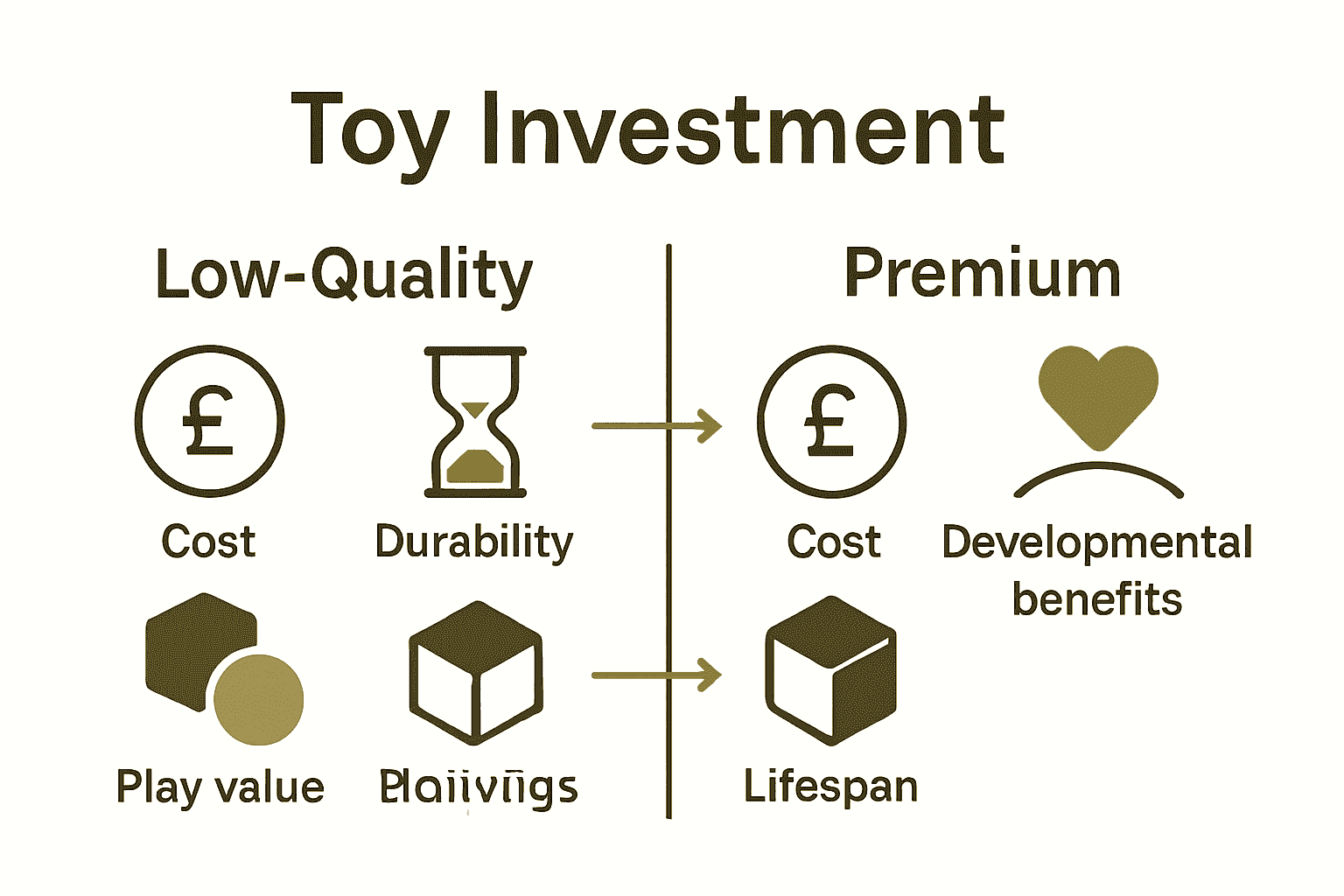
Investing in quality toys is more than a purchase - it’s a strategic decision that offers significant long-term benefits for children’s development and family finances. Eastern Connecticut State University research reveals that durable, open-ended toys provide extended play opportunities and adapt to a child’s evolving developmental stages.
Cost-Effective Play Solutions
Contrary to popular belief, high-quality toys can actually save money over time. Instead of repeatedly purchasing disposable or quickly outgrown playthings, investing in versatile toys means:
- Longer play lifespans
- Adaptability across multiple developmental stages
- Reduced need for frequent replacements
- Enhanced play value and learning potential
Smart Alternatives to Expensive Toys
Psychology Today emphasizes that simple, versatile toys often provide more developmental value than costly, specialized products. Alternatives like wooden blocks, basic figurines, and construction sets offer remarkable flexibility, supporting creativity, problem-solving, and imagination without demanding significant financial investment.
Maximizing Play Investment
The key to cost-effective toy selection lies in understanding developmental progression. Choose toys that grow with your child, offering multiple play modes and challenges. Wooden building sets, art materials, and open-ended play resources represent excellent investments that continue to engage children as they develop new skills and interests.
To discover more strategies for making intelligent toy investments, explore our guide on why wooden toys matter, which provides comprehensive insights into selecting timeless, valuable play resources.
Discover the Lasting Benefits of Quality Toys for Your Child’s Growth
Choosing the right toys can feel overwhelming when you want the best for your child’s development. This article highlights the importance of open-ended, durable, and imaginative toys that grow with your child and support cognitive, social, and emotional skills. If you are looking to invest wisely in toys that truly nurture creativity and learning while saving money in the long term, the challenge is to find trusted sources offering well-curated, meaningful playthings.
Explore Learning Bugs, where you will find a carefully selected range of premium toys including wooden blocks, role play sets, and educational kits designed to inspire active play and imagination. Start your journey towards smart toy choices today and give your child gifts that last and truly matter. Visit our complete guide to open-ended toys and learn why choosing wooden toys is a timeless investment. Make your next toy purchase count at Learning Bugs.
Frequently Asked Questions
What are the key characteristics of quality toys?
Quality toys typically possess open-ended play potential, durability, age-appropriate complexity, and the ability to stimulate creativity. These attributes ensure they support cognitive, emotional, and physical development in children.
How do quality toys contribute to child development?
Quality toys promote child development by enhancing cognitive skills through problem-solving and creative thinking, fostering social and emotional learning through imaginative play, and aiding physical development by improving fine and gross motor skills.
Are expensive toys always of higher quality?
No, a higher price tag does not guarantee better quality. Simple toys, such as wooden blocks and basic figurines, can often provide more meaningful play experiences and developmental benefits than sophisticated, costly items.
What types of toys are considered premium for developmental purposes?
Premium toys include construction toys, replica play toys, and art supplies. These categories encourage creativity, imaginative play, and self-expression while supporting various developmental skills in children.
0 comments