

Most british children still encounter toys that reflect only a small slice of the world’s cultures, even though families here are more diverse than ever. Studies show early exposure to multicultural playthings can boost empathy and broaden social skills. For parents eager to raise kids who thrive in a global society, understanding what truly defines multicultural toys and clearing up common myths can shape more meaningful childhood experiences.
Table of Contents
- Defining Multicultural Toys and Common Myths
- Types of Multicultural Toys Available in the UK
- How Multicultural Toys Support Child Development
- Choosing Quality Multicultural Toys for Your Child
- Potential Challenges and How to Overcome Them
Key Takeaways
| Point | Details |
|---|---|
| Multicultural toys enrich learning | These toys promote inclusivity and cultural awareness, aiding children’s empathy and social skills development. |
| Representation matters | Authentic multicultural toys go beyond appearance, facilitating a deeper understanding of diverse cultures. |
| Importance for all children | Multicultural toys benefit every child, cultivating respect and appreciation for differences, regardless of their background. |
| Choosing quality is essential | Parents should focus on authenticity and educational value when selecting multicultural toys for meaningful development. |
Defining Multicultural Toys and Common Myths
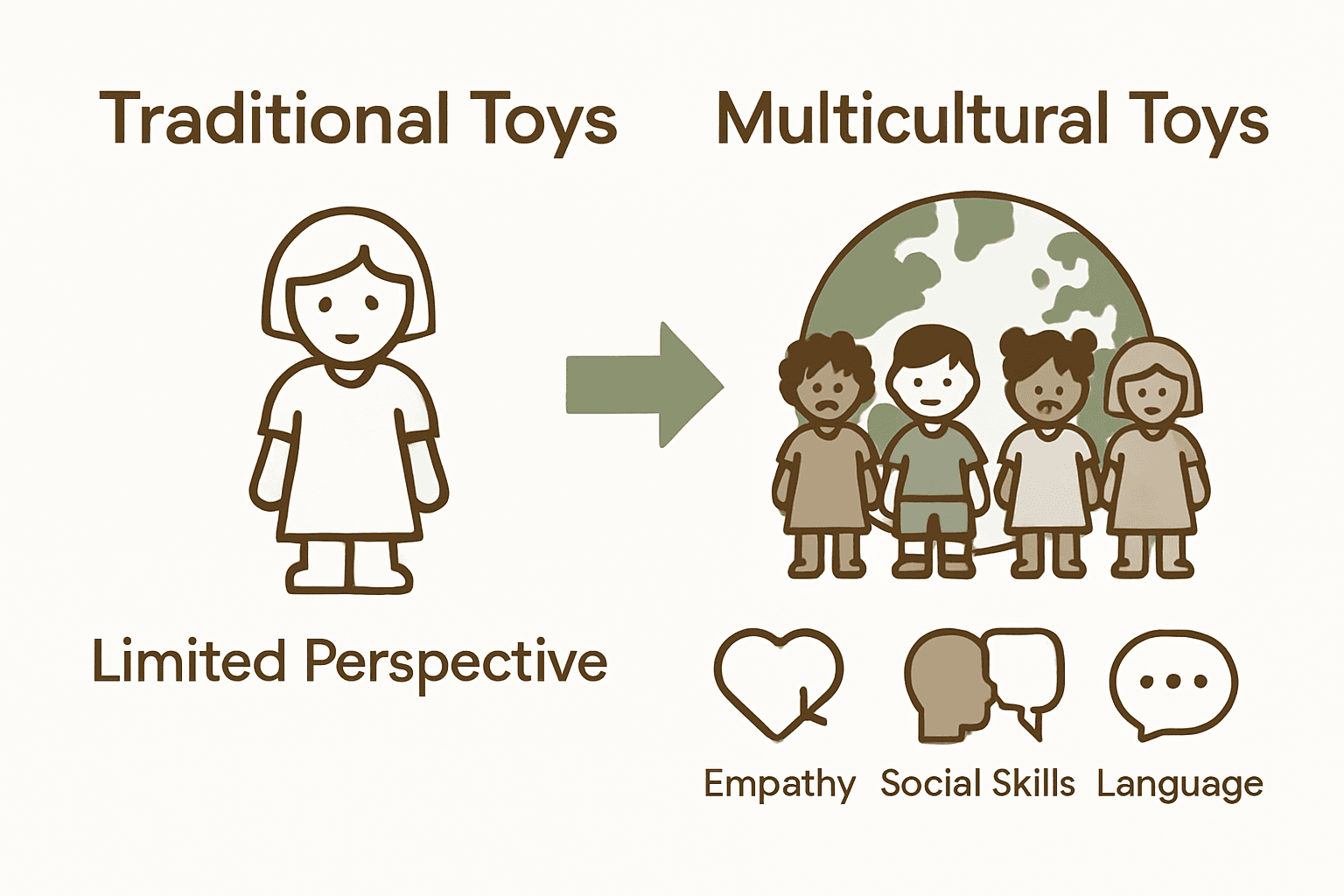
Multicultural toys are specially designed playthings that represent and celebrate diverse cultural backgrounds, ethnicities, and global traditions. According to ewe, these resources are crafted to facilitate understanding and appreciation of different cultures among young children. Unlike traditional toys that often reflect limited perspectives, multicultural toys actively promote inclusivity and global awareness from an early age.
Contrary to common misconceptions, multicultural toys are not just about representing different skin tones or physical appearances. Authentic multicultural toys go far beyond surface-level representation. As highlighted by Little Whispers, these toys are designed to help children learn about empathy, acceptance, and the beautiful complexity of our global community. They serve multiple developmental purposes:
- Encourage cultural curiosity and respect
- Develop emotional intelligence
- Challenge stereotypical thinking
- Support children’s identity formation
- Promote inclusive play experiences
Many parents mistakenly believe that multicultural toys are only relevant for families from diverse backgrounds. However, these toys are crucial for all children, regardless of their own cultural heritage. By introducing diverse representations through play, children learn critical social skills like understanding, empathy, and appreciation for differences. This approach helps build a more inclusive mindset from a very young age, preparing children to navigate an increasingly interconnected world.
For parents seeking to support their child’s cultural understanding, exploring the benefits of educational toys can provide additional insights into how play supports holistic childhood development.
Types of Multicultural Toys Available in the UK
Multicultural toys in the UK market offer diverse representations that go beyond traditional playthings. Early Years Direct provides an excellent example with their multicultural doll family sets, featuring four members from different cultural backgrounds. These dolls are designed with flexible, poseable arms and legs, enabling children to engage in imaginative storytelling while experiencing cultural diversity.
The range of multicultural toys available in the UK encompasses several key categories:
- Dolls and Figurines: Representing diverse ethnicities, body types, and cultural clothing
- Cultural Dress-Up Sets: Authentic costumes from various global traditions
- Storybooks and Learning Resources: Narratives featuring characters from different backgrounds
- World Music Instruments: Traditional instruments from various cultures
- Global Playsets: Miniature scenes depicting different international environments
These toys are carefully crafted to provide more than visual representation.
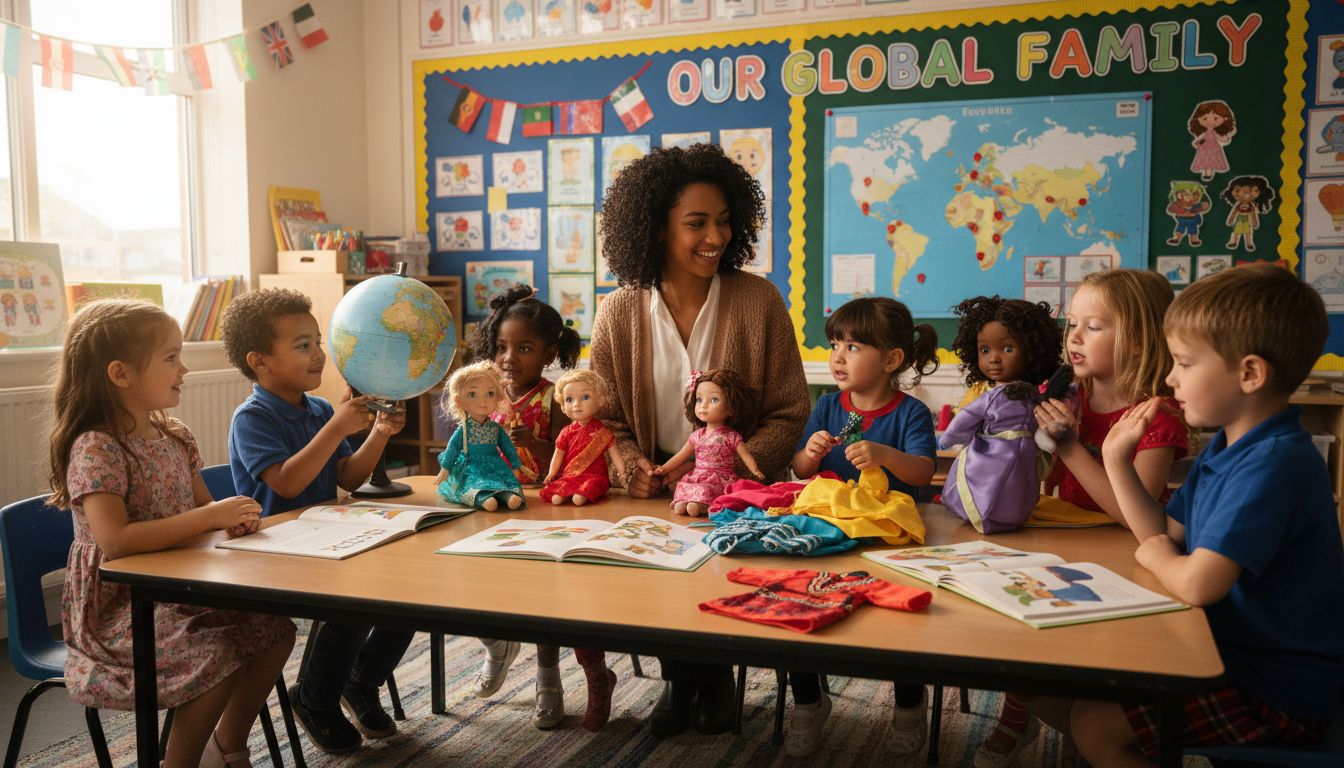 They serve as powerful educational tools that help children develop cultural empathy, curiosity, and understanding. By introducing play experiences that reflect the rich tapestry of global communities, parents can support their children’s social and emotional development.
Parents looking to explore more enriching play options might want to check out our educational gift guide for modern families, which offers additional insights into selecting meaningful, developmental toys.
How Multicultural Toys Support Child Development
Multicultural toys play a profound role in supporting holistic child development, addressing cognitive, emotional, and social learning domains simultaneously. Children engage with these toys not just as playthings, but as powerful tools for understanding the complex, interconnected world around them. By representing diverse experiences, these toys help children develop critical skills that extend far beyond traditional play.
The developmental benefits of multicultural toys can be categorised into several key areas:
- Cognitive Development: Enhancing critical thinking and perspective-taking abilities
- Emotional Intelligence: Building empathy and understanding of different human experiences
- Social Skills: Promoting inclusive communication and reducing unconscious bias
- Identity Formation: Supporting positive self-perception and cultural pride
- Language Acquisition: Introducing diverse communication styles and vocabulary
Through imaginative play with multicultural toys, children learn to challenge stereotypes and develop a more nuanced understanding of human diversity. These toys create safe, engaging spaces where children can explore complex social concepts, ask questions, and develop genuine curiosity about different cultural backgrounds. By normalising diversity through play, parents can help their children build foundational skills of respect, understanding, and genuine human connection.
For parents seeking deeper insights into purposeful play, our guide to the role of toys in development offers comprehensive strategies for supporting children’s growth through thoughtful toy selection.
Choosing Quality Multicultural Toys for Your Child
Selecting the right multicultural toys requires careful consideration beyond just visual representation. Authenticity and quality are paramount when introducing diverse play experiences to children. Little Whispers demonstrates this approach with their Bibinee Ethnic Dolls, which are crafted using recycled plush and fibers, emphasising both cultural representation and environmental responsibility.
When choosing multicultural toys, parents should evaluate several critical factors:
- Material Safety: Non-toxic, durable materials
- Cultural Accuracy: Authentic representations respectful of traditions
- Age Appropriateness: Developmental stage alignment
- Narrative Quality: Toys with meaningful, nuanced storytelling potential
- Sensory Experience: Engaging textures and interactive features
Beyond physical characteristics, the most effective multicultural toys create opportunities for meaningful dialogue and exploration. Look for toys that invite questions, encourage storytelling, and provide context about different cultural experiences. These selections should spark curiosity, challenge stereotypes, and support children’s natural inclination to learn about the world around them.
To make informed choices about educational playthings, parents can explore our guide to choosing educational toys, which offers comprehensive insights into selecting toys that support meaningful child development.
Potential Challenges and How to Overcome Them
Parents may encounter several nuanced challenges when introducing multicultural toys to their children. East-West Education highlights the importance of approaching these resources with sensitivity and intentionality, recognising that authentic cultural representation requires more than superficial diversity.
Common challenges parents might face include:
- Misconceptions and Stereotyping: Risk of reinforcing oversimplified cultural narratives
- Age-Appropriate Understanding: Balancing complexity with child’s developmental stage
- Historical Accuracy: Ensuring respectful and nuanced cultural representation
- Personal Bias: Recognising and managing unconscious parental perspectives
- Limited Exposure: Avoiding tokenistic or narrow cultural representations
Overcoming these challenges requires proactive, thoughtful engagement. Parents should approach multicultural toys as educational tools, initiating conversations that explore cultural contexts, encourage questions, and celebrate the richness of human diversity. This means going beyond the toy itself to provide context, share stories, and create meaningful dialogue that supports children’s understanding of global communities.
To support parents navigating these complex educational choices, our guide to choosing educational toys offers comprehensive strategies for selecting meaningful, developmentally appropriate play experiences that promote genuine cultural understanding.
Embrace the Power of Multicultural Play for Your Child’s Growth
Choosing the right multicultural toys goes well beyond appearance and colour. As explored in our guide, authentic and thoughtfully designed toys help children develop empathy, cultural respect and emotional intelligence while challenging stereotypes. Yet parents often face challenges such as ensuring cultural accuracy and finding quality toys that spark meaningful conversations and curiosity.
Discover how Learning Bugs supports your journey with a curated collection of high-quality, developmental toys that celebrate diversity and promote inclusive play. Our range aligns perfectly with your goal to nurture understanding and identity through sensory-stimulating and imaginative playthings. Explore toys that invite storytelling and learning at Learning Bugs and gain expert guidance from our guide to choosing educational toys. Start building an enriching play environment today that prepares your child for a compassionate and connected world.
Frequently Asked Questions
What are multicultural toys and why are they important?
Multicultural toys are designed to represent and celebrate diverse cultural backgrounds. They are important because they promote inclusivity, cultural understanding, and empathy among children, helping them appreciate the complexity of global diversity from a young age.
How do multicultural toys support child development?
Multicultural toys support various aspects of child development, including cognitive skills, emotional intelligence, social skills, identity formation, and language acquisition. They encourage critical thinking and empathy, fostering a more inclusive mindset in children.
What types of multicultural toys are available?
There is a range of multicultural toys available, including dolls and figurines, cultural dress-up sets, storybooks, world music instruments, and global playsets, all designed to provide authentic representation and educational value.
How can parents choose quality multicultural toys?
Parents should look for multicultural toys made from safe, non-toxic materials, ensuring cultural accuracy and age appropriateness. It’s also important to consider the narrative quality of the toys and their potential to spark meaningful dialogue about diversity.
0 comments