

Over 80 percent of british parents say they want toys that truly support their child’s learning and development. The choices in toy aisles can feel endless but finding the perfect fit for your child’s age and interests plays a crucial role in their cognitive and social growth. With simple guidance, you can turn every play session into an opportunity for joyful discovery and real learning.
Table of Contents
- 1. Choose Age-Appropriate Educational Toys
- 2. Prioritise Sensory-Stimulating Play Options
- 3. Opt for Timeless Wooden and Eco-Friendly Gifts
- 4. Encourage Imagination with Role Play Sets
- 5. Support Early Learning with Educational Kits
- 6. Promote Active Play through Ride-Ons and Movement Toys
- 7. Select Toys that Grow with Your Child’s Development
Quick Summary
| Key Insight | Explanation |
|---|---|
| 1. Choose Age-Appropriate Toys | Select toys that align with your child’s developmental milestones to enhance learning and engagement in play. |
| 2. Incorporate Sensory-Stimulating Activities | Use toys that engage multiple senses, promoting cognitive and emotional development through diverse experiences. |
| 3. Opt for Sustainable Wooden Toys | Choose wooden toys for durability and environmental consciousness, encouraging intentional play that fosters creativity. |
| 4. Foster Imaginative Play with Role Sets | Role play sets allow children to explore complex scenarios, enhancing social skills and emotional intelligence through storytelling. |
| 5. Select Toys That Adapt to Growth | Invest in versatile toys that evolve with your child’s capabilities, ensuring continuous learning and developmental support. |
1. Choose Age-Appropriate Educational Toys
Selecting the right educational toy is more than just picking something colourful off the shelf. It requires thoughtful consideration of your child’s developmental stage, learning needs, and individual interests. Understanding how toys align with specific age milestones can transform playtime into a powerful learning experience.
When choosing educational toys, parents should focus on materials that match their child’s cognitive and physical capabilities. Developmental appropriateness is key to ensuring that toys genuinely support learning rather than frustrating or overwhelming young minds. Learn how to make informed choices with our guide to choosing educational toys.
The magic happens when toys challenge children just enough to stimulate growth without causing undue stress. Different age groups require distinctly different play experiences:
- Babies (0-12 months): Focus on sensory exploration with high contrast objects, soft textures, and simple rattles
- Toddlers (1-3 years): Prioritise toys that encourage motor skill development like stacking blocks and simple puzzles
- Preschoolers (3-5 years): Select toys promoting imaginative play, basic problem solving, and social interaction
Parents should observe their child’s interaction with toys, noting which ones spark genuine curiosity and sustained engagement. A well chosen toy becomes more than just an object it becomes a gateway to discovery, learning, and joyful development.
2. Prioritise Sensory-Stimulating Play Options
Sensory play transforms ordinary playtime into an extraordinary developmental journey for children. These rich experiences engage multiple senses simultaneously, helping young minds build critical neural connections and understand their surrounding world in profound ways.
According to Action for Children, sensory play is crucial for cognitive and emotional development, offering children opportunities to explore textures, sounds, and movements that stimulate brain growth. Sensory experiences are not just fun they are fundamental building blocks of learning.
When selecting sensory play options, look for toys and activities that engage different sensory pathways:
- Touch: Textured materials like soft fabrics, smooth stones, or squishy clay
- Sound: Musical instruments, sound blocks, or items that create interesting noises
- Visual: Colourful objects, light exploration tools, and movement based play items
- Proprioceptive: Weighted blankets, resistance toys, and balance challenges
As the National Day Nurseries Association highlights, these experiences support not just cognitive development but also help children regulate emotions, improve motor skills, and build confidence through exploration. Discover more about creating meaningful sensory experiences with our guide to why sensory toys matter.
Remember that sensory play is about quality over quantity. Choose items that genuinely engage your child and invite curiosity rather than overwhelming their senses. Each sensory interaction is a small adventure in learning and discovery.
3. Opt for Timeless Wooden and Eco-Friendly Gifts
Wooden toys represent more than just playthings they are investments in sustainable, meaningful childhood experiences. These classic treasures offer durability, aesthetic beauty, and developmental benefits that plastic alternatives simply cannot match.
Sustainable materials like responsibly sourced wood provide children with sensory rich play experiences while supporting environmental consciousness. By choosing wooden toys, you are making a statement about quality, longevity, and ecological responsibility. Discover the comprehensive role of wooden toys in modern child development and play.
When selecting wooden and eco friendly gifts, consider these key attributes:
- Craftsmanship: Handcrafted toys with smooth edges and natural finishes
- Durability: Toys that can withstand multiple generations of play
- Educational value: Items that encourage imagination and open ended exploration
- Sustainability: Products made from renewable materials with minimal environmental impact
Wooden toys engage children differently compared to mass produced plastic alternatives. They encourage slower, more intentional play that develops fine motor skills, spatial reasoning, and creativity. These timeless gifts grow with your child, transforming from simple objects to cherished childhood memories.
Remember that true value lies not in complexity but in thoughtful design. Choose wooden toys that spark curiosity, invite exploration, and create lasting connections between play and learning.
4. Encourage Imagination with Role Play Sets
Role play sets are magical portals that transport children into worlds of creativity, social understanding, and cognitive development. These carefully crafted play experiences allow young minds to explore complex scenarios, experiment with different perspectives, and build essential life skills through imaginative exploration.
Imaginative play is far more than simple entertainment. It represents a critical developmental pathway where children learn emotional regulation, problem solving, and social interaction. Discover inspiring examples of open ended toys that spark boundless creativity and learning.
When selecting role play sets, consider options that offer rich storytelling potential:
- Professional sets: Doctors, chefs, builders kits encouraging career exploration
- Domestic scenarios: Kitchen, cleaning, and care giving play sets
- Adventure themes: Exploration sets like camping, gardening, or travel experiences
- Fantasy worlds: Costumes and props that enable storytelling and character development
Role play sets provide a safe environment for children to process real world experiences, understand social dynamics, and develop empathy. By mimicking adult behaviours, children learn complex communication skills, emotional intelligence, and creative problem solving.
Remember that the most powerful role play sets are open ended, allowing children to interpret and reimagine scenarios through their unique perspective. Encourage their natural storytelling instincts and watch their imagination flourish.
5. Support Early Learning with Educational Kits
Educational kits are powerful learning tools that transform complex concepts into engaging, hands on experiences for young minds. These carefully designed packages provide structured yet creative pathways for children to explore science, technology, mathematics, and other critical developmental domains.
According to the Department of Education in Northern Ireland, early learning environments that incorporate structured educational resources can significantly enhance cognitive development. Targeted learning kits offer children opportunities to explore, experiment, and understand fundamental principles through interactive play. Explore the comprehensive guide to understanding why educational toys matter for deeper insights.
When selecting educational kits, consider options that support multifaceted learning:
- STEM exploration kits: Simple science experiments and engineering challenges
- Mathematical reasoning sets: Puzzles and games that develop numerical skills
- Language development collections: Interactive spelling and communication tools
- Creative problem solving packages: Logic games and constructive building sets
The most effective educational kits encourage curiosity, promote independent thinking, and adapt to children’s evolving cognitive abilities. They provide scaffolded learning experiences that make complex concepts accessible and enjoyable.
Remember that the best educational kits are those that feel less like instruction and more like adventure. Choose resources that spark wonder, invite questions, and celebrate the joy of discovery.
6. Promote Active Play through Ride-Ons and Movement Toys
Ride-ons and movement toys are not just playthings they are crucial developmental tools that support physical literacy, coordination, and confidence in young children. These dynamic play options transform ordinary movement into extraordinary learning experiences.
According to the NHS physical activity guidelines, active play is fundamental to children’s health and developmental progression. Movement based toys provide essential opportunities for children to develop gross motor skills, spatial awareness, and physical confidence. Explore our guide to understanding outdoor play toys for deeper insights into active play benefits.
Consider ride-ons and movement toys that support different developmental stages:
- Balance bikes: Support early coordination and confidence
- Scooters: Develop leg strength and steering skills
- Pedal tricycles: Encourage full body coordination
- Rocking toys: Enhance vestibular and core muscle development
The most effective movement toys challenge children just beyond their current abilities, creating a perfect learning zone that encourages growth, resilience, and physical exploration.
Remember that active play is about joy, discovery, and gradual skill building. Choose toys that spark excitement and invite children to move, explore, and celebrate their growing capabilities.
7. Select Toys that Grow with Your Child’s Development
The most intelligent toy purchases are those that adapt and evolve alongside your child’s developmental journey. Transformative toys represent more than simple playthings they are strategic investments in your child’s cognitive, emotional, and physical growth.
Explore our comprehensive guide to the role of toys in development to understand how thoughtfully selected toys can support your child’s unique learning trajectory. The key is selecting versatile items that offer multiple levels of engagement and challenge.
Consider toys with these transformative characteristics:
- Modular design: Toys with interchangeable components that increase complexity
- Multiple difficulty levels: Puzzles and construction sets with progressive challenges
- Open ended play potential: Items that encourage creative interpretation
- Skill adaptability: Toys supporting different developmental stages
Intelligent toy selection requires observing your child’s emerging capabilities and choosing resources that sit just beyond their current skill level. These carefully chosen play companions become catalysts for continuous learning, sparking curiosity and building confidence through incremental challenges.
Remember that the most valuable toys are not necessarily the most expensive but those that inspire ongoing exploration, imagination, and personal growth.
Below is a comprehensive table summarising the main strategies and considerations for selecting educational toys for children.
| Strategy | Implementation | Benefits/Outcomes |
|---|---|---|
| Choose Age-Appropriate Toys | Select toys based on developmental stages: sensory exploration for babies, motor skills for toddlers, imaginative play for preschoolers. | Supports learning, prevents frustration, enhances developmental growth. |
| Prioritise Sensory Stimulating Options | Use textured, sound-producing, and visually engaging toys to stimulate different senses. | Promotes cognitive development, emotion regulation, and motor skills. |
| Opt for Wooden and Eco-Friendly Gifts | Choose sustainably crafted wooden toys with durability and educational value. | Encourages eco-consciousness, imaginative play, and long-term use across generations. |
| Encourage Imagination with Role Play Sets | Provide sets for professional, domestic, adventure, and fantasy themes. | Develops emotional regulation, problem-solving, and social skills. |
| Support Early Learning with Educational Kits | Select kits for STEM, mathematics, language, and problem-solving. | Facilitates cognitive growth through engaging, hands-on experiences. |
| Promote Active Play with Movement Toys | Choose balance bikes, scooters, tricycles, and rocking toys. | Enhances gross motor skills, coordination, and physical confidence. |
| Select Toys that Grow with Development | Invest in modular, multi-level, open-ended toys. | Encourages continuous learning, curiosity, and personal growth. |
Discover Thoughtfully Curated Educational Toys for Every Stage of Your Child’s Growth
The challenge many modern families face is finding toys that truly support their child’s development while also inspiring joy and creativity. This guide highlights the importance of age-appropriate, sensory-stimulating, and imaginative play options that foster learning without overwhelming young minds. At Learning Bugs, we understand the desire to select toys that not only entertain but also promote cognitive, emotional, and physical growth at every stage.
Our collection reflects these essential qualities by offering wooden toys, role play sets, and educational kits designed to challenge and delight your child as they grow. Whether you are seeking gifts that encourage active play or toys that develop problem-solving skills, our carefully curated range helps you create meaningful and lasting play experiences.
Explore our selection of educational toys that evolve with your child’s interests and abilities. Visit Learning Bugs to find the perfect toy to spark curiosity and confidence.
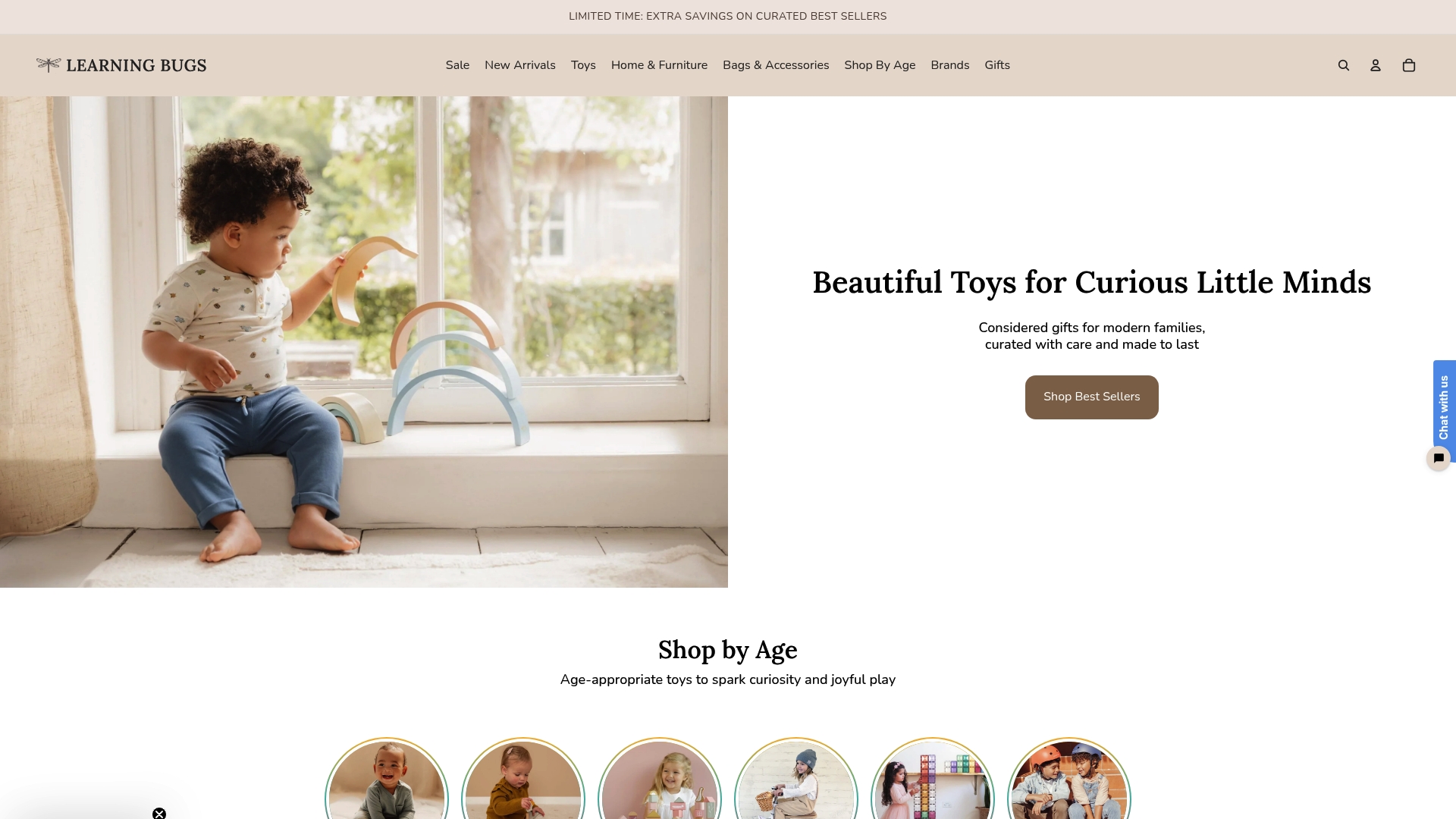
Start your journey to enriching play today and give your child more than a toy – give them a gateway to discovery. Browse our inspiring range and make an informed choice that supports joyful developmental growth now. Find out more at Learning Bugs and unlock the power of purposeful play.
Discover why our customers trust us to provide quality products by exploring insights on how to choose educational toys and why sensory toys matter.
Frequently Asked Questions
What types of educational toys are suitable for different age groups?
Selecting educational toys should consider your child’s developmental stage. Toys for babies might focus on sensory exploration, while toddlers may benefit from building and motor skill toys. Aim for age-appropriate selections that promote learning and curiosity.
How can I encourage sensory play with my child?
Promote sensory play by providing toys and activities that engage multiple senses, such as textured materials for touch or musical instruments for sound. Look for options that spark curiosity without overwhelming your child, allowing them to explore at their own pace.
Why should I choose wooden and eco-friendly toys?
Wooden and eco-friendly toys are durable and foster imaginative play while promoting environmental consciousness. Choose toys that are well-crafted from sustainable materials, as they encourage thoughtful play and can withstand years of use.
How can role play sets enhance my child’s development?
Role play sets encourage imaginative exploration and help children process real-world experiences. Select open-ended sets that allow your child to experiment with different scenarios and emotions, promoting their social skills and emotional intelligence.
What characteristics should I look for in educational kits?
When choosing educational kits, focus on options that support STEM learning and encourage independent thinking. Look for hands-on experiences that make complex concepts accessible, such as simple experiments or interactive games that challenge your child’s reasoning skills.
How do I select toys that will grow with my child’s development?
Select toys with modular designs or multiple difficulty levels to ensure they can adapt as your child grows. Look for items that offer various engagement levels, allowing your child to revisit them as their skills develop and their interests change.
Recommended
- The Essential Guide to the Role of Educational Toys – Learning Bugs
- How to Gift Educational Toys for Lasting Impact – Learning Bugs
- Why Invest in Educational Toys: Complete Guide – Learning Bugs
- Complete Guide to Benefits of Educational Toys – Learning Bugs
- How to Select Gifts: Complete UK Guide for 2025 – Wrapt
- 7 Inspiring Examples of Gift Boxes for UK Gift Givers – Wrapt