

Over 60 percent of British families report that sensory play has transformed their child’s daily routine. As parents seek ways to nurture healthy brain development, tactile toys are becoming a staple in British homes. These play resources offer much more than entertainment. They foster essential neurological growth by inviting children to touch, explore, and learn from varied textures. Discover how the right tactile toys can shape brighter futures for young minds in the United Kingdom.
Table of Contents
- Tactile Toys Explained For Modern Families
- Types Of Tactile Toys And Key Differences
- How Tactile Play Boosts Child Development
- Practical Uses At Home And Nursery Settings
- Safety And Quality Standards In The UK
- Comparing Tactile Toys With Digital Alternatives
Key Takeaways
| Point | Details |
|---|---|
| Importance of Tactile Toys | Tactile toys are essential for children’s development, stimulating sensory systems and supporting neurological growth. |
| Types of Tactile Toys | Various categories, such as sensory balls and textured building blocks, provide distinct developmental benefits and sensory interactions. |
| Home and Nursery Strategies | Integrating tactile play experiences at home and in nursery settings can enhance children’s exploration and learning processes. |
| Safety Standards | Tactile toys in the UK must adhere to strict safety standards ensuring they are free from hazards and suitable for children’s use. |
Tactile Toys Explained for Modern Families
Tactile toys are specialised play resources designed to stimulate children’s sense of touch, providing critical developmental experiences during early childhood. These carefully crafted playthings help children explore texture, temperature, and physical sensations while supporting critical neurological and motor skill development.
Understanding how tactile toys engage children’s sensory systems reveals their profound importance. When children interact with toys featuring different materials and surfaces, they develop essential neural pathways that support cognitive and physical growth. By exploring sensory play strategies, parents can create rich learning environments that encourage exploration and understanding through touch.
The research highlights several key benefits of tactile play for children’s development. Textured toys help children:
- Improve fine motor coordination
- Develop sensory processing skills
- Enhance spatial awareness
- Build neural connections in the brain
- Support emotional regulation through sensory input
Modern families recognise that tactile toys are more than simple playthings. They are sophisticated developmental tools that support children’s neurological growth, providing engaging and meaningful sensory experiences that prepare young minds for future learning challenges.
Types of Tactile Toys and Key Differences
Tactile toys represent a diverse range of play experiences designed to engage children’s sense of touch through varied textures, materials, and sensory interactions. These specialised play resources can be categorised into several distinct types, each offering unique developmental benefits and sensory exploration opportunities for young learners.
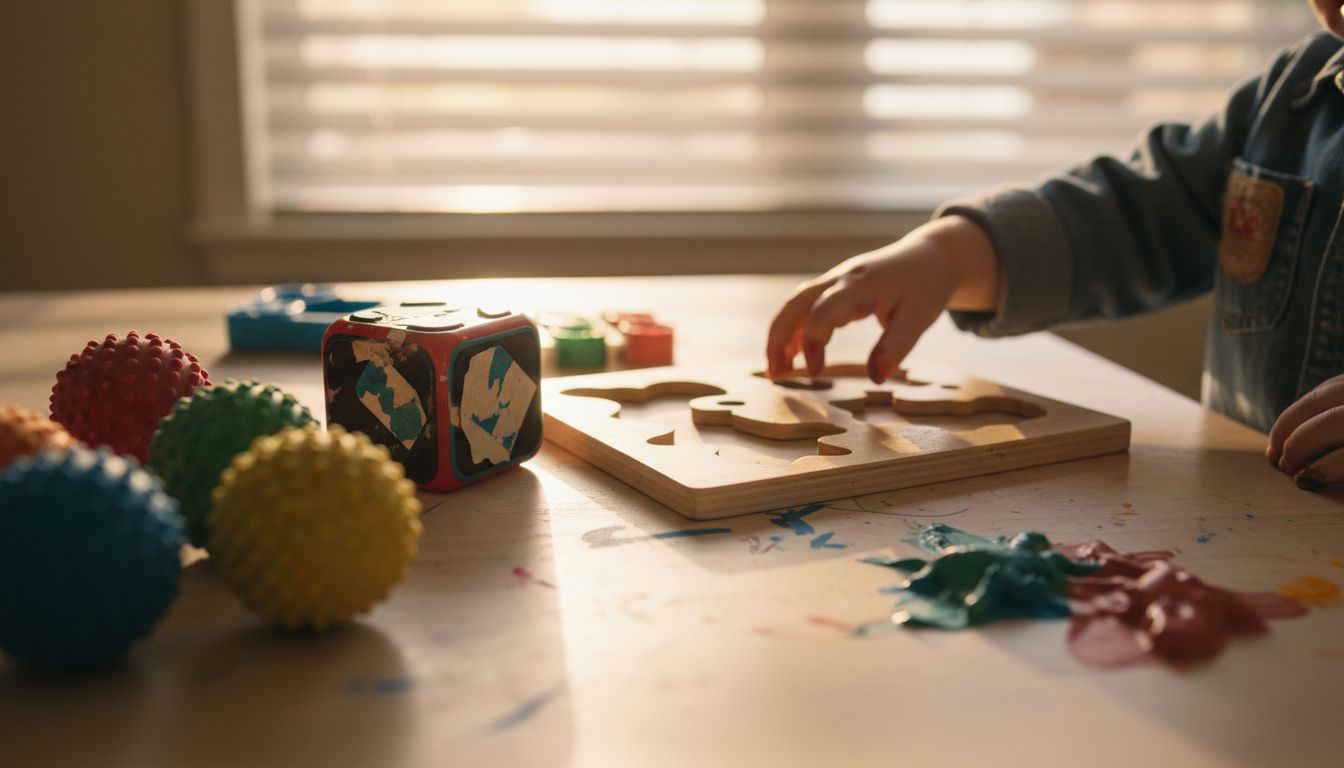
One fundamental category includes textured manipulation toys, which encourage children to explore different surface qualities. These might include soft fabric blocks, rubber puzzles with raised patterns, or wooden objects with varied grain textures. By exploring fine motor skill development, parents can select toys that not only stimulate touch but also support precise hand movements and cognitive processing.
Key categories of tactile toys encompass:
- Sensory Balls: Featuring bumpy, smooth, or ridged surfaces
- Textured Building Blocks: With raised patterns and multiple surface qualities
- Soft Fabric Toys: Offering different fabric textures and temperatures
- Manipulative Puzzles: With varied touch experiences
- Sensory Play Mats: Providing comprehensive tactile exploration environments
Understanding these variations helps parents select age-appropriate toys that match their child’s developmental stage and sensory processing needs. By introducing diverse tactile experiences, families can support neurological growth, enhance fine motor skills, and create engaging learning opportunities through thoughtful play interactions.
How Tactile Play Boosts Child Development
Tactile play represents a powerful developmental mechanism that goes far beyond simple sensory stimulation. Through purposeful interactions with varied textures and materials, children engage in complex neurological and cognitive processes that fundamentally shape their understanding of the physical world around them.
Research reveals fascinating insights into how tactile experiences contribute to child development. Spatial reasoning and collaborative skills emerge through meaningful touch-based interactions, demonstrating that tactile play is not just about sensation, but about building complex cognitive capabilities. Children who regularly engage with tactile toys develop enhanced understanding of spatial relationships, texture differences, and interpersonal communication strategies.
Key developmental benefits of tactile play include:
- Improved sensory processing capabilities
- Enhanced fine motor skill development
- Strengthened neural pathway connections
- Better spatial awareness
- Increased cognitive flexibility
Moreover, tangible educational interactions demonstrate that tactile play can significantly improve children’s learning retention and understanding. By transforming abstract concepts into concrete, touchable experiences, children can more effectively process and internalise complex information, making learning an engaging and immersive process that goes well beyond traditional instructional methods.
Practical Uses at Home and Nursery Settings
Creating sensory-rich environments at home and in nursery settings is crucial for supporting children’s developmental journey. Thoughtful integration of tactile experiences helps children explore, learn, and grow through meaningful interactions with their surroundings.
Sensory strategies for supporting child development emphasise the importance of purposeful play spaces that encourage tactile exploration. Parents and caregivers can transform ordinary settings into dynamic learning environments by strategically introducing textured materials, sensory play zones, and interactive tactile experiences that stimulate children’s curiosity and cognitive growth.
Practical approaches for incorporating tactile play include:
- Creating designated sensory exploration corners
- Rotating textured toys and materials regularly
- Designing safe touch-based activity stations
- Introducing diverse surface materials
- Encouraging supervised independent exploration
Selecting engaging tactile toys requires careful consideration of a child’s developmental stage and individual sensory preferences. By offering a variety of textures, temperatures, and interactive experiences, caregivers can support children’s sensory processing skills while making learning an enjoyable, immersive experience that adapts to each child’s unique developmental trajectory.
Safety and Quality Standards in the UK
Ensuring the safety of children’s toys is a critical responsibility for manufacturers, retailers, and parents across the United Kingdom. Tactile toys, which provide essential sensory experiences for children, must meet stringent safety requirements to protect young users from potential hazards and ensure optimal developmental benefits.
Toy manufacturers’ responsibilities are comprehensively outlined by UK regulatory bodies, establishing clear guidelines for material selection, design, and production. These regulations cover crucial aspects such as potential choking hazards, toxic material restrictions, and age-appropriate design considerations that protect children during play.
Key safety standards for tactile toys include:
- Rigorous material testing for toxicity
- Strict size and durability requirements
- Age-appropriate design guidelines
- Comprehensive labelling of potential risks
- Regular quality control inspections
British Standards Institution testing procedures provide an additional layer of protection, ensuring that tactile toys undergo extensive evaluation before reaching market shelves. These certification processes involve meticulous assessments of material safety, structural integrity, and potential interaction risks, giving parents confidence in the toys they select for their children’s sensory exploration and developmental experiences.
Comparing Tactile Toys with Digital Alternatives
The landscape of children’s play is evolving, presenting parents with nuanced choices between traditional tactile toys and increasingly sophisticated digital alternatives. While both play formats offer unique developmental opportunities, understanding their distinctive characteristics is crucial for making informed decisions about children’s play experiences.
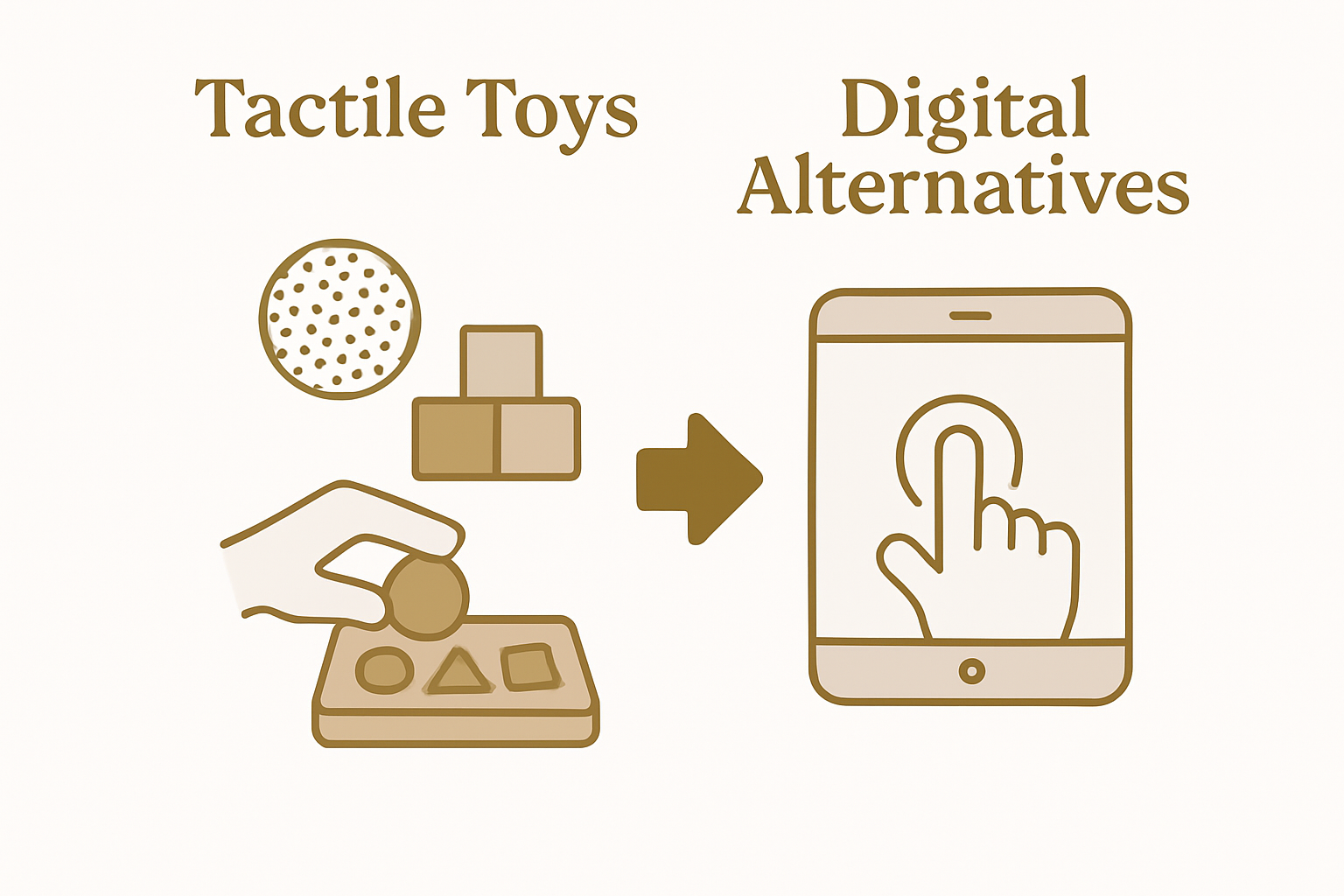
Smart toy security and privacy considerations reveal critical differences between tactile and digital play options. Digital toys often introduce complex technological risks, including potential data privacy concerns and reduced physical interaction, whereas traditional tactile toys provide direct, unmediated sensory experiences that support fundamental developmental processes without digital complications.
Key comparative aspects include:
- Physical manipulation capabilities
- Direct sensory feedback
- Cognitive engagement levels
- Privacy and security risks
- Long-term developmental impact
Tangible learning technologies demonstrate that screen-free, physically interactive toys can effectively teach complex concepts like programming. By prioritising hands-on experiences, tactile toys create more meaningful learning environments that encourage problem-solving, creativity, and direct neural pathway development in ways digital alternatives often struggle to replicate.
Unlock Your Child’s Potential with Thoughtfully Designed Tactile Toys
Understanding the vital role tactile toys play in enriching children’s development is the first step towards nurturing strong sensory processing skills and fine motor growth. At Learning Bugs, we recognise the challenge parents face in finding high-quality, sensory-stimulating toys that truly support cognitive and physical advancement through purposeful touch and play. Our carefully curated collection focuses on timeless wooden toys, educational kits, and engaging role play sets designed to stimulate young minds and bodies safely.
Discover how you can transform your child’s playtime into a meaningful developmental journey with our expertly selected toys. Visit Learning Bugs today to explore products that align with the latest insights on tactile play, ensuring your child receives the sensory experiences essential for emotional regulation, spatial awareness, and enhanced neural connections. Start building a brighter future now by choosing toys that inspire creativity and hands-on exploration at Learning Bugs.
For tailored guidance on choosing the perfect sensory toys, browse our finely chosen play products designed to meet your child’s unique needs and developmental stage.
Frequently Asked Questions
What are tactile toys?
Tactile toys are specialised play resources designed to stimulate children’s sense of touch, helping them explore different textures and sensations while supporting their developmental growth.
How do tactile toys benefit children’s development?
Tactile toys offer numerous benefits, including improved fine motor coordination, enhanced sensory processing skills, better spatial awareness, and the development of neural connections in the brain.
What types of tactile toys are available for children?
Common types of tactile toys include sensory balls, textured building blocks, soft fabric toys, manipulative puzzles, and sensory play mats, each providing unique sensory exploration opportunities.
How can I incorporate tactile play at home?
You can create tactile play experiences at home by setting up designated sensory corners, rotating textured toys, designing touch-based activity stations, and encouraging supervised independent exploration with a variety of materials.
Recommended
- The Essential Guide to Why Sensory Toys Matter – Learning Bugs
- Complete Guide to the Role of Toys in Development – Learning Bugs
- 7 Smart Ways Early Years Learning Toys Support Child Growth – Learning Bugs
- 7 Best Learning Toys for Toddlers to Boost Development – Learning Bugs
- Understanding the Benefits of Imaginative Play – The Zoofamily
- Complete Guide to Family Activity Ideas – BLUSHBEES USA