

Most british families notice their homes filling up with toys that break or get tossed aside far too quickly. With millions of toys discarded each year, parents are starting to question if there is a better way. Sustainable toys are transforming how children play by using long-lasting materials and ethical production. Learning what sets these toys apart helps families make choices that nurture their children while also protecting the environment.
Table of Contents
- Defining Sustainable Toys And Their Purpose
- Common Types Of Sustainable Toys In The UK
- Key Benefits For Children And Families
- Safety, Certification, And UK Standards
- Comparing Sustainable Toys To Conventional Options
Key Takeaways
| Point | Details |
|---|---|
| Sustainable Materials | Sustainable toys utilise renewable or recycled materials, ensuring a lower ecological impact compared to conventional plastic toys. |
| Developmental Benefits | These toys foster child development by enhancing creativity, cognitive skills, and promoting environmental stewardship. |
| Safety and Standards | Sustainable toy manufacturers adhere to stringent safety protocols, ensuring children’s play experiences are both safe and non-toxic. |
| Long-term Value | Investing in sustainable toys offers longevity and durability, making them a more economical choice over time despite potentially higher initial costs. |
Defining Sustainable Toys and Their Purpose
Sustainable toys represent a thoughtful approach to children’s play that goes far beyond simple entertainment. These carefully crafted playthings are designed with environmental consciousness, child development, and long-term impact in mind. Unlike conventional plastic toys that quickly end up in landfills, sustainable toys prioritise materials, manufacturing processes, and lifecycle considerations that minimise ecological harm.
At their core, sustainable toys embody several key principles that set them apart from traditional play options. These principles include:
- Using renewable or recycled materials like responsibly sourced wood, organic cotton, or recycled plastics
- Ensuring manufacturing processes have minimal carbon footprint
- Creating toys that are durable and designed to be passed down through generations
- Supporting ethical labour practices and fair working conditions
- Avoiding harmful chemicals and toxins in production
The purpose of sustainable toys extends well beyond environmental protection. These thoughtfully designed playthings serve multiple developmental goals for children. Why Toys With Purpose highlights how sustainable toys can nurture creativity, encourage imaginative play, and support cognitive development while teaching children important values about environmental stewardship.
By choosing sustainable toys, families make a powerful statement about their commitment to both child development and planetary health. These toys represent more than just playthings – they are educational tools that help children understand concepts of responsibility, conservation, and mindful consumption from an early age. The investment in quality, ethically produced toys ultimately creates a meaningful learning experience that extends far beyond the playroom.
Common Types of Sustainable Toys in the UK
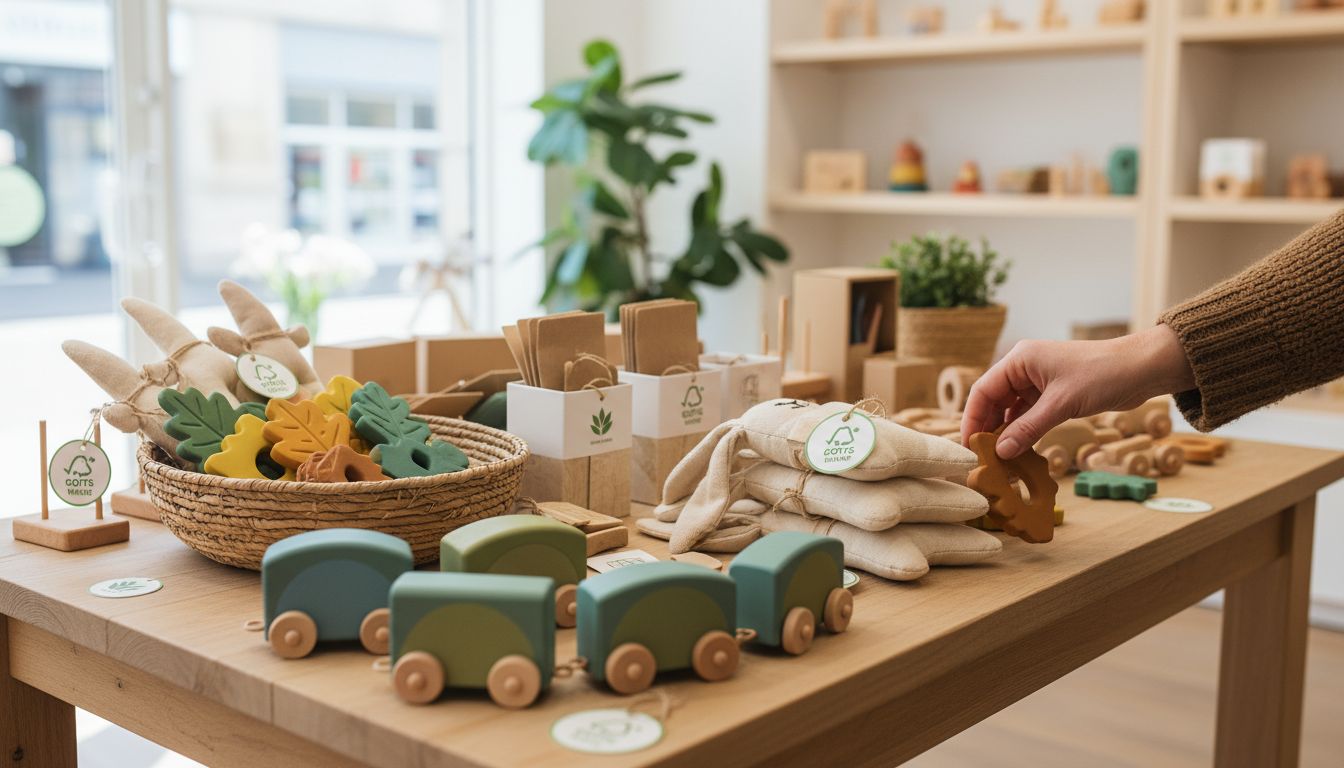
The landscape of sustainable toys in the United Kingdom offers parents a rich array of environmentally conscious play options that combine educational value with ecological responsibility. According to Moral Fibres, the most prominent types of sustainable toys include wooden toys, organic cotton playthings, and natural rubber alternatives that provide children with high-quality, eco-friendly play experiences.
Wooden toys stand at the forefront of sustainable play options, particularly those crafted from responsibly sourced materials like rubberwood – a clever byproduct of latex production that minimises waste. These toys typically feature:
- Durable construction from renewable timber sources
- Non-toxic, water-based paint finishes
- Natural grain textures that engage children’s sensory exploration
- Designs that support fine motor skill development
The Role of Open Ended Toys highlights how sustainable toys, especially wooden variants, encourage imaginative play and cognitive flexibility. Junk Rubbish Waste confirms that organic cotton toys and natural rubber alternatives are gaining significant popularity among UK parents seeking environmentally responsible play options.
Beyond wooden toys, sustainable play options in the UK include organic cotton soft toys, natural rubber teething accessories, and educational kits made from recycled materials. These toys not only reduce environmental impact but also introduce children to concepts of sustainability, responsible consumption, and ecological awareness from an early age. By choosing these thoughtfully designed playthings, families can support both child development and planetary health through mindful toy selection.
Key Benefits for Children and Families
Sustainable toys offer profound benefits that extend far beyond simple playtime entertainment, creating meaningful experiences for both children and families. According to MyBaba, these thoughtfully designed playthings provide children with safe, non-toxic play options while simultaneously encouraging environmental responsibility and sustainable habits within family units.
The developmental advantages of sustainable toys are remarkably comprehensive. These toys support critical areas of child growth, including:
- Enhanced cognitive development through open-ended play
- Improved fine and gross motor skill coordination
- Increased creativity and imaginative thinking
- Sensory exploration through natural materials
- Longer-lasting play experiences due to superior durability
The Role of Toys in Development highlights how sustainable toys can significantly contribute to children’s learning journey. By choosing eco-conscious play options, parents introduce their children to important concepts of environmental stewardship, teaching them that consumer choices can have positive planetary impacts from an incredibly young age.
Families investing in sustainable toys also benefit from reduced long-term environmental impact and potential cost savings. These high-quality, durable toys are typically designed to be passed down through generations, creating cherished heirlooms that carry meaningful memories and important lessons about responsible consumption. By prioritising sustainable play options, families make a powerful statement about their values, demonstrating a commitment to both child development and ecological consciousness.
Safety, Certification, and UK Standards
Safety is paramount when selecting toys for children, and sustainable toy manufacturers in the United Kingdom have developed rigorous standards to ensure maximum protection and quality. According to Moral Fibres, sustainable toys often adhere to FSC certification for wood, which guarantees that materials are sourced responsibly and meet stringent safety requirements for children’s play products.
The key safety considerations for sustainable toys in the UK include multiple critical aspects:
- Comprehensive material testing for harmful chemicals
- Non-toxic paint and finish applications
- Compliance with British and European safety regulations
- Regular quality control checks
- Age-appropriate design considerations
Junk Rubbish Waste emphasises that sustainable toys are meticulously designed using non-toxic paints and finishes, with materials like organic cotton carefully selected to be free from pesticides and synthetic dyes. These stringent standards ensure that children can explore and play without parents worrying about potential health risks.
UK toy safety standards go beyond basic material selection, incorporating comprehensive testing protocols that evaluate everything from potential choking hazards to long-term durability. Manufacturers of sustainable toys must navigate complex regulatory landscapes, including British Standards Institution (BSI) guidelines and European Safety Standards (EN71), which mandate exhaustive safety assessments. This multi-layered approach ensures that sustainable toys not only support environmental consciousness but also provide parents with absolute confidence in their children’s play experiences.
Comparing Sustainable Toys to Conventional Options
The world of children’s playthings presents a stark contrast between traditional plastic toys and modern sustainable alternatives. According to Junk Rubbish Waste, sustainable toys crafted from materials like wood and organic cotton offer significant advantages over conventional plastic options, delivering superior durability, enhanced safety, and a dramatically reduced environmental footprint.
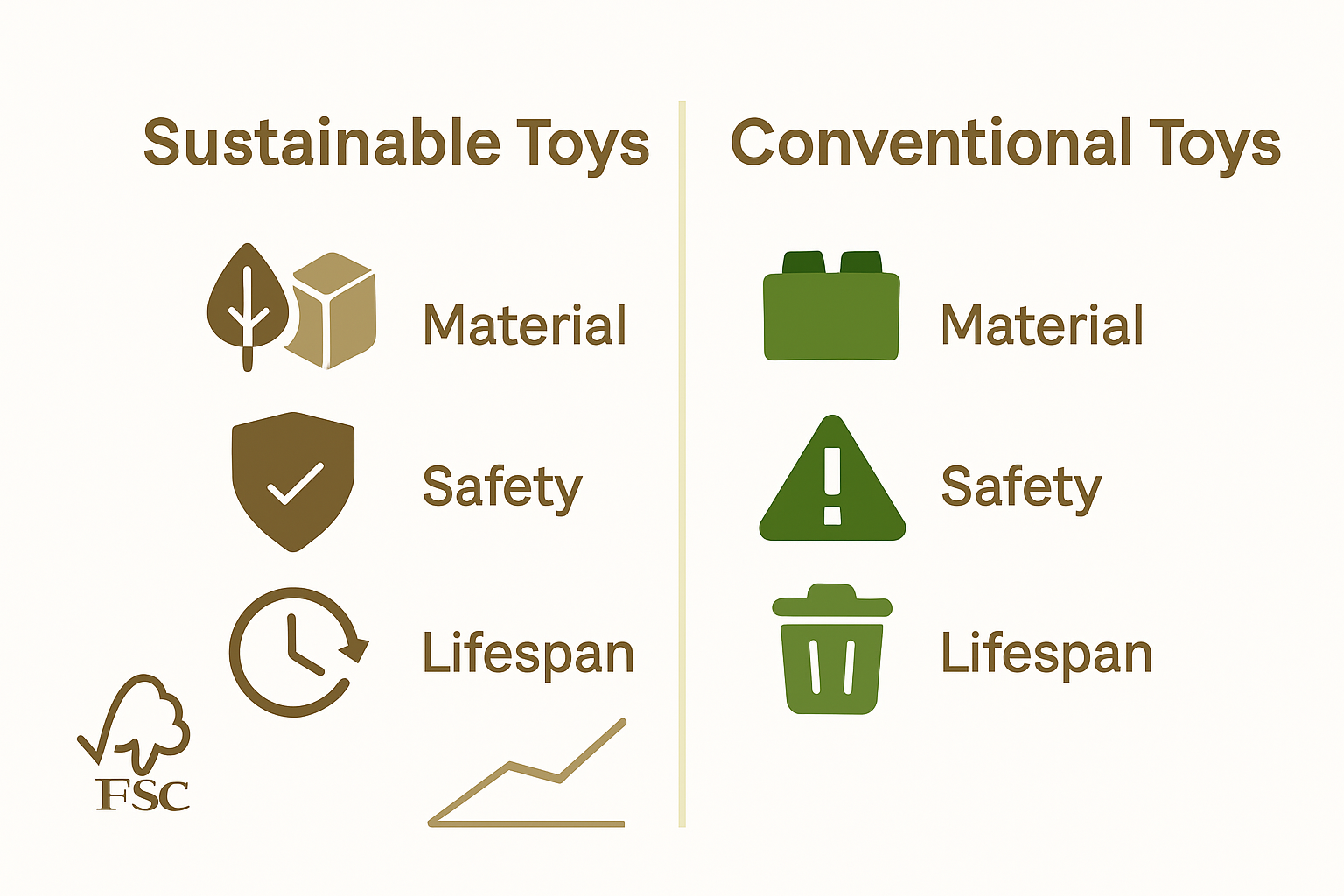
Key differences between sustainable and conventional toys become immediately apparent when examining critical characteristics:
- Material Quality: Natural materials versus synthetic plastics
- Environmental Impact: Recyclable and biodegradable versus landfill-bound
- Durability: Long-lasting construction versus disposable design
- Chemical Composition: Non-toxic versus potential chemical leaching
- Manufacturing Process: Responsible sourcing versus mass production
Role of Wooden Toys Today underscores how sustainable toys transcend mere playtime entertainment, offering educational value and developmental benefits that mass-produced plastic alternatives cannot match. Conventional toys often prioritise short-term cost-effectiveness, whereas sustainable options invest in quality, longevity, and child development.
The economic argument for sustainable toys becomes compelling when considering long-term value. While initial purchase prices might seem higher, these thoughtfully designed playthings outlast multiple generations of conventional toys. By choosing sustainable alternatives, families make a conscious investment in both their children’s play experiences and the planet’s future, transforming a simple toy purchase into an act of environmental and developmental responsibility.
Discover Sustainable Toys That Truly Make a Difference
Choosing toys that are safe, durable and respectful of the planet is a challenge many UK families face today. This article highlights key pain points such as the environmental impact of conventional plastics, the need for ethically made products and the desire to nurture children’s creativity with mindful choices. At Learning Bugs, we understand these concerns and offer a carefully curated selection of high-quality wooden toys, organic materials and educational playsets designed to inspire imagination and support developmental growth.
Explore our range to find timeless, sensory-stimulating toys that reflect your values about sustainability and child development. Every purchase helps you invest in toys that last for generations and teach your children the importance of responsibility and care for our world. Start your journey to more meaningful play today by visiting Learning Bugs and see our special collections that make choosing sustainable toys easy and rewarding.
Frequently Asked Questions
What are sustainable toys?
Sustainable toys are playthings designed with environmental consciousness, utilising renewable or recycled materials and ethical manufacturing processes, and are intended to minimise ecological impact while promoting child development.
What are the benefits of choosing sustainable toys for my child?
Sustainable toys offer numerous benefits, including enhanced cognitive development, improved motor skills, increased creativity, and sensory exploration, while also teaching children the values of environmental stewardship and responsible consumption.
How do sustainable toys compare to conventional plastic toys?
Sustainable toys typically use natural materials, have a lower environmental impact, and are often more durable than conventional plastic toys, which can contribute to landfill waste and may contain harmful chemicals.
What safety standards apply to sustainable toys in the UK?
Sustainable toys in the UK adhere to strict safety standards, including material testing for harmful chemicals, the use of non-toxic paints, and compliance with British and European safety regulations to ensure they are safe for children’s use.
Recommended
- How to Pick Wooden Toys: A Parent’s Guide to Quality – Learning Bugs
- The Essential Guide to Best Toys for 2025 – Learning Bugs
- Why Choose Wooden Toys: Complete Guide for Families – Learning Bugs
- Wooden Toys Care Guide: Keep Playthings Safe and Lasting – Learning Bugs
- 7 Smart Ways to Use Eco Friendly Pet Food Packaging – Ultimate Pet Foods
- Environmentally Friendly Window Treatments: A 2025 Guide for UK Homes | Shutter World
0 comments