

Over 60 percent of british children show advanced language skills when their playtime includes interactive toys. Early communication takes center stage in every household, shaping social connections and future learning. Understanding how toys influence language growth gives parents an edge, revealing why certain playthings hold the key to more words, better storytelling, and stronger confidence in british kids from the very start.
Table of Contents
- How Toys Influence Language Growth
- Types of Toys Impacting Speech and Communication
- Stages of Language Supported by Play
- Selecting the Best Toys for Early Talking
- Common Pitfalls in Toy Selection for Language
Key Takeaways
| Point | Details |
|---|---|
| Influence of Toys on Language | Toys can significantly enhance children’s language skills by fostering interactive and imaginative play experiences. |
| Selection of Language-Boosting Toys | Prioritise toys that promote verbal interaction and narrative creation to support language development. |
| Engagement Strategies | Parents should actively engage in play, modeling rich language and rotating toys to sustain interest and exploration. |
| Common Mistakes in Toy Choice | Avoid overly electronic toys that limit interaction, as they can hinder meaningful communication opportunities for children. |
How Toys Influence Language Growth
Children’s linguistic skills emerge through playful interactions with toys, transforming seemingly simple objects into powerful language learning tools. Research from the University of Portsmouth reveals that infants are significantly more communicative when engaging with manufactured objects, demonstrating how toys can spark early verbal exploration.
Toys act as essential mediators in language development by creating interactive scenarios that encourage verbal communication. When children play with dolls, figurines, or role-play sets, they naturally begin narrating stories, describing actions, and experimenting with words. These imaginative scenarios provide safe environments for practising pronunciation, expanding vocabulary, and understanding grammatical structures. The Cambridgeshire and Peterborough Children’s Health NHS emphasises that play objects help children learn about interpersonal communication and social interaction.
The language-boosting potential of toys varies across different play types. Interactive toys that respond to sounds or actions can prompt children to verbalise commands or reactions. Storytelling toys like puppet sets encourage narrative skills, while construction toys motivate descriptive language about shapes, colours, and spatial relationships. By selecting toys that prompt verbal engagement, parents can create rich language learning environments that feel like pure play to children.
Key strategies for maximising language growth through toys include:
- Choose toys that invite conversation and storytelling
- Engage actively with your child during play, modelling rich language
- Rotate toys to maintain novelty and continued verbal exploration
- Select age-appropriate toys that match developmental communication stages
Types of Toys Impacting Speech and Communication
Research from the University of Portsmouth reveals that manufactured objects significantly influence infant language development, making certain toy types particularly powerful for communication skills. Narrative toys emerge as critical tools in this linguistic journey, enabling children to construct complex verbal scenarios and explore language’s expressive potential.
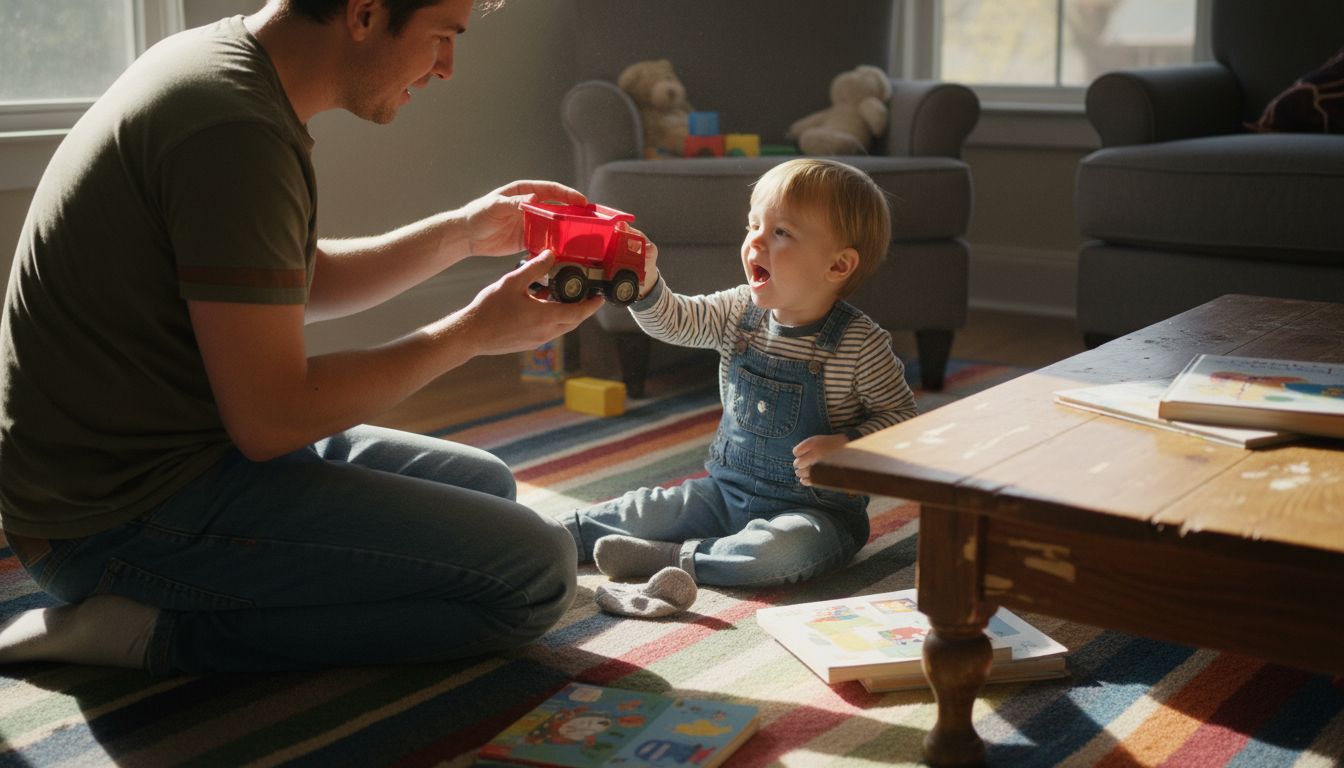
Interactive play sets prove especially effective in stimulating speech development. Dollhouses, puppet theatres, and role-play kits create immersive environments where children naturally verbalise characters’ interactions, experimenting with dialogue, tone, and conversational structures. Understanding educational toy selection becomes crucial in supporting these language-rich play experiences, as different toy types offer unique communication challenges and opportunities.
Some remarkable toy categories that enhance speech and communication include:
- Storytelling Toys: Puppets, figurines, and narrative playsets
- Responsive Electronic Toys: Interactive devices that prompt verbal commands
- Construction Toys: Building blocks and sets encouraging descriptive language
- Imaginative Role-Play Sets: Kitchens, doctor sets, and workplace environments
The Cambridgeshire and Peterborough Children’s Health NHS emphasises that these toys do more than entertain—they provide structured opportunities for children to practise social communication, learn turn-taking, and develop nuanced linguistic skills through playful interaction.
Stages of Language Supported by Play
Research from University College London reveals that language development follows intricate stages during play, with each developmental phase supporting unique communication skills. Infant play initially focuses on sensory exploration and object manipulation, where babies begin associating sounds with physical interactions, laying crucial foundations for early linguistic comprehension.
As children progress, their play becomes increasingly complex and language-rich. Toddlers engage in symbolic play, using toys to represent real-world scenarios, which dramatically enhances their vocabulary and narrative capabilities. Learning through play becomes a sophisticated process where children experiment with communication strategies, mimicking adult conversations and developing nuanced linguistic structures.
The key developmental language stages supported by play include:
- Exploratory Stage (0-12 months): Sensory interaction and sound production
- Symbolic Stage (1-3 years): Object representation and basic storytelling
- Narrative Stage (3-5 years): Complex storytelling and conversational skills
- Social Interaction Stage (5-7 years): Advanced communication and role-playing
The Cambridgeshire and Peterborough Children’s Health NHS emphasises that these play-based language stages are not rigid boundaries but fluid experiences where children continuously develop increasingly sophisticated communication skills through imaginative and interactive play.
Selecting the Best Toys for Early Talking
Research from the University of Portsmouth highlights that manufactured toys play a critical role in stimulating infant language development, making strategic toy selection essential for encouraging early communication. Interactive toys become powerful tools that prompt verbal responses and create engaging environments where children naturally experiment with sound and language.
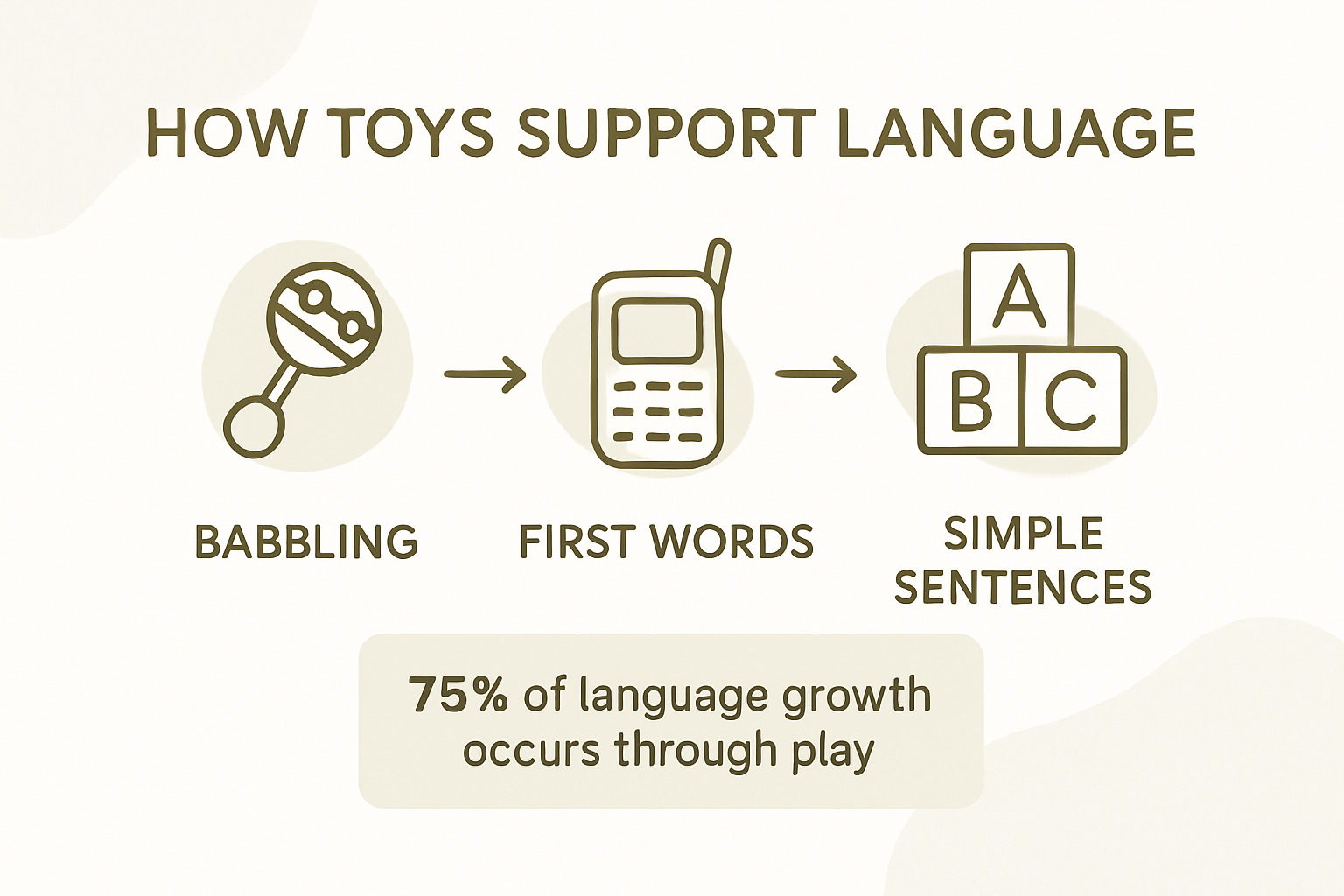
When choosing toys to support early talking, parents should focus on items that invite conversation and social interaction. How to choose educational toys becomes crucial in identifying playthings that motivate children to verbalise their thoughts and experiences. Puppets, role-play sets, and responsive electronic toys can transform passive play into dynamic linguistic experiences that challenge and expand a child’s communication skills.
Key considerations for selecting language-boosting toys include:
- Choose toys that mimic real-world scenarios
- Prioritise items encouraging back-and-forth interaction
- Select age-appropriate toys with multiple engagement possibilities
- Look for toys that prompt descriptive language and storytelling
The Cambridgeshire and Peterborough Children’s Health NHS emphasises that the most effective toys are not about complexity, but about creating opportunities for meaningful communication and imaginative expression that naturally encourage children to explore and develop their emerging language skills.
Common Pitfalls in Toy Selection for Language
Research from Kent University reveals a critical insight about toy selection: electronic toys, while seemingly engaging, can inadvertently reduce the quality of parent-child language interactions. Over-reliance on technological toys can create passive learning environments that diminish the rich verbal exchanges essential for language development.
Parents often make subtle mistakes when choosing language-supportive toys. Why toys with purpose becomes crucial in understanding that not all toys are created equal. Toys that produce pre-programmed sounds or limit imaginative play can restrict a child’s natural linguistic exploration, replacing interactive communication with one-directional audio experiences.
Common language development toy selection pitfalls include:
- Choosing toys with excessive electronic features
- Selecting toys that do not encourage dialogue
- Overlooking age-appropriate communication challenges
- Prioritising entertainment over interactive potential
- Neglecting toys that prompt storytelling and role-play
The Cambridgeshire and Peterborough Children’s Health NHS emphasises that effective language learning happens through toys that create opportunities for meaningful interaction, imagination, and collaborative communication—not through passive, technology-driven experiences.
Unlock Your Child’s Language Potential with Purposeful Play
The article emphasises the vital role that interactive toys and imaginative playsets have in boosting early language skills by encouraging storytelling, conversation, and social communication. Many parents struggle with identifying toys that truly support language development without relying on passive electronic features. At Learning Bugs, we understand this challenge and offer a carefully curated range of creative, sensory-stimulating toys designed to inspire meaningful interaction and verbal exploration.
Explore the extensive collection at Learning Bugs where you can find specially selected role play sets, storytelling toys, and building kits that nurture communication at every developmental stage. Act now to transform ordinary playtime into a powerful language-learning experience and give your child the gift of confident, joyful speech. Discover toys that invite conversation and imaginative expression today at Learning Bugs, your trusted partner in fostering childhood development through play.
Frequently Asked Questions
What types of toys are best for boosting language development?
Toys that encourage storytelling, interaction, and role-playing are best for boosting language development. Examples include puppets, dollhouses, and construction sets.
How do interactive toys promote language growth in children?
Interactive toys that respond to sounds or actions encourage children to verbalise commands and reactions, fostering engagement and verbal exploration during play.
What are some common pitfalls to avoid when selecting toys for language development?
Common pitfalls include choosing toys with excessive electronic features that limit interaction, selecting toys that do not encourage dialogue, and overlooking age-appropriate challenges.
At what age should I start introducing language-boosting toys to my child?
You can start introducing language-boosting toys from infancy. Sensory exploration toys can help infants associate sounds with actions, while toddlers benefit from more complex narrative and role-play toys.
Recommended
- Complete Guide to the Role of Toys in Development – Learning Bugs
- 7 Smart Ways Early Years Learning Toys Support Child Growth – Learning Bugs
- Understanding Why Choose Educational Toys for Children – Learning Bugs
- Role of Toys for Fine Motor Skills: Complete Guide – Learning Bugs
- Social Benefits and Cultural Impact of Tabletop Role-Playing Games